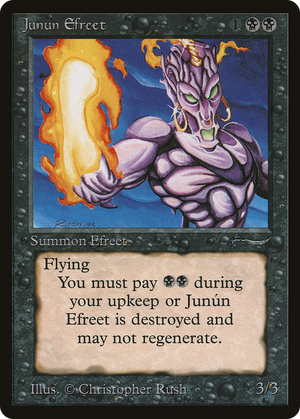
Junún Efreet


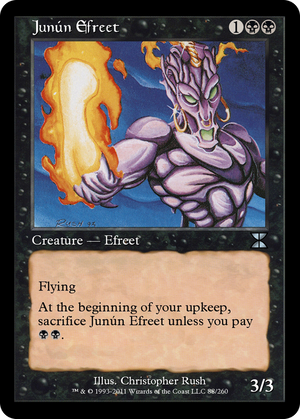
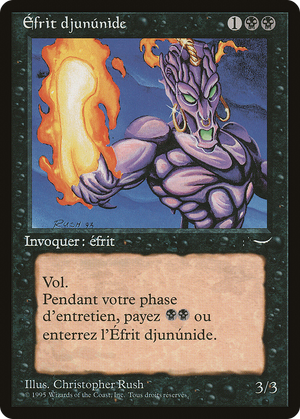
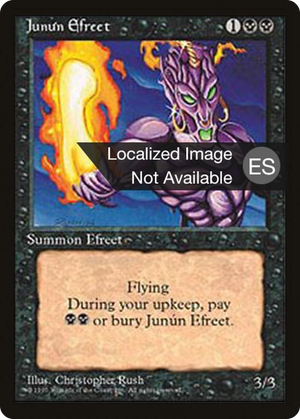
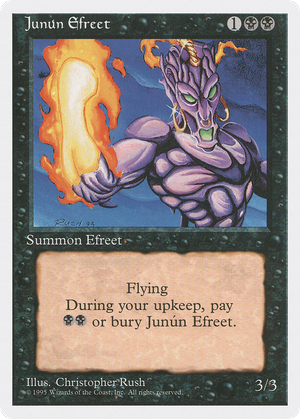
Black flying beaters were not supposed to exist at three mana in this era, and the design solution to that problem is the upkeep cost. The body is set to a flagship rate: a 3/3 flyer for three felt enormous when Sengir Vampire cost five and Mahamoti Djinn cost six. The sacrifice clause is the lever that pulls the rate back into line, and the specific choice of double black is doing real work: it forces a commitment to mono-black or near-mono-black manabases, punishes the splash deck that would otherwise pay the tax sideways, and tightens as the game extends and lands get tapped down or stripped. The upkeep-tax design pattern is one Wizards has returned to repeatedly (Juzám Djinn took the life-loss route in the same period; later cards found other recurring costs), but few express the idea as cleanly: you get a premium creature now, and every turn you keep it the card asks whether you would rather have the mana for something else. The flavor of an unreliable spirit who must be continually bribed is doing as much work as the math; the card is a small thesis statement about how restriction, not weakness, is the way you balance an evergreen rate.
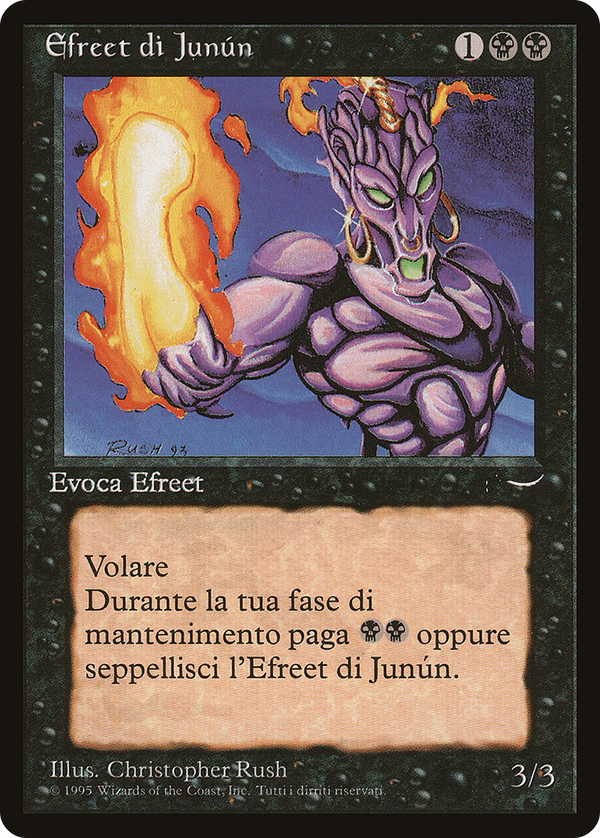
Rules text
.