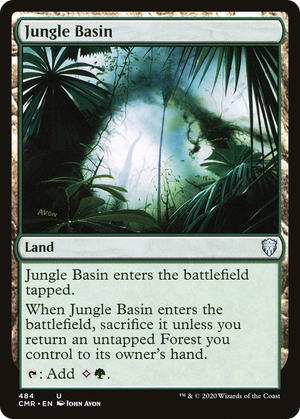
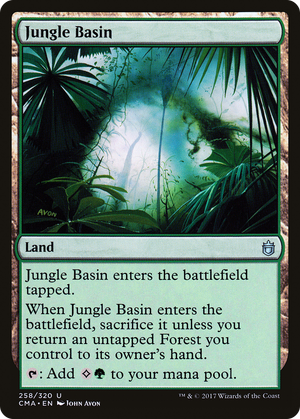
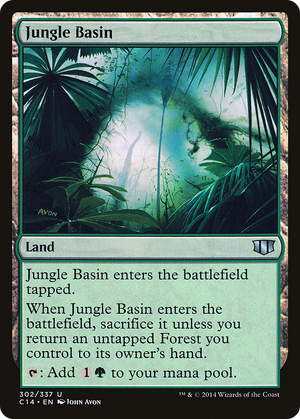
Jungle Basin
The "Karoo" cycle from this era is a study in deferred cost: a land that produces two mana from a single slot, but only after you pay it back a full turn of tempo. Entering tapped is the obvious tax; the return requirement is the real one. Sending an untapped Forest back to hand means the turn you play this you have effectively skipped a land drop, replaying one of your lands instead of advancing your count. The reward is a source that taps for two (colorless and green together) out of one land, the kind of card-advantage smoothing that lets a slow deck stretch its land drops further than its draws should allow. The fragility is that the sacrifice trigger checks for an untapped Forest specifically: if every Forest you control is tapped, the land eats itself on the way in, and the requirement can be awkward to satisfy on a stumbling draw. Its math only ever looked good in a slow, mana-hungry deck willing to trade a turn now for a stable two-mana source later. The cycle it belongs to was gently superseded by every land innovation since (the Ravnica bouncelands that recoup the tempo by tapping for two colors, the modern tapland duals, fetchlands that ask for no tempo at all), but it remains a clean illustration of how early design priced a two-mana land: not with a downside printed on the rate, but with a tax levied on the turn you played it.
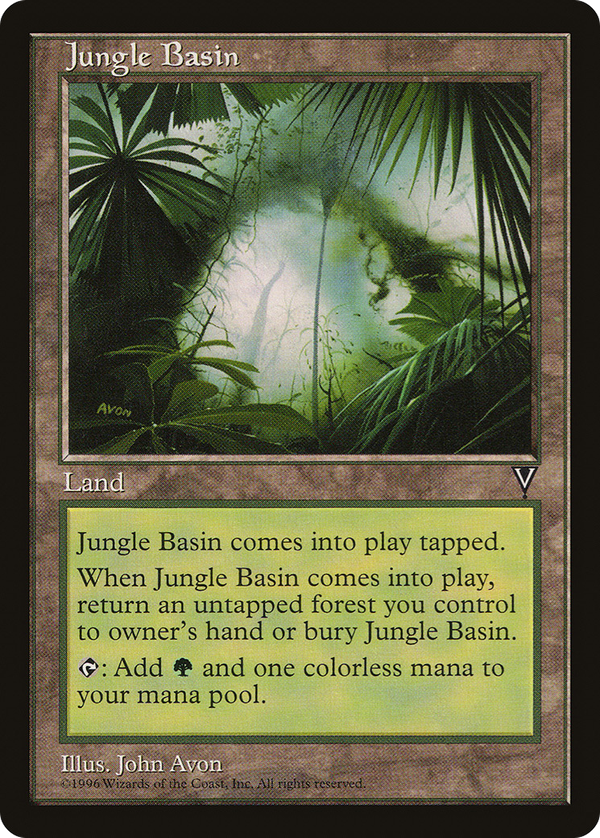
Rules text
 : Add
: Add 
 .
.