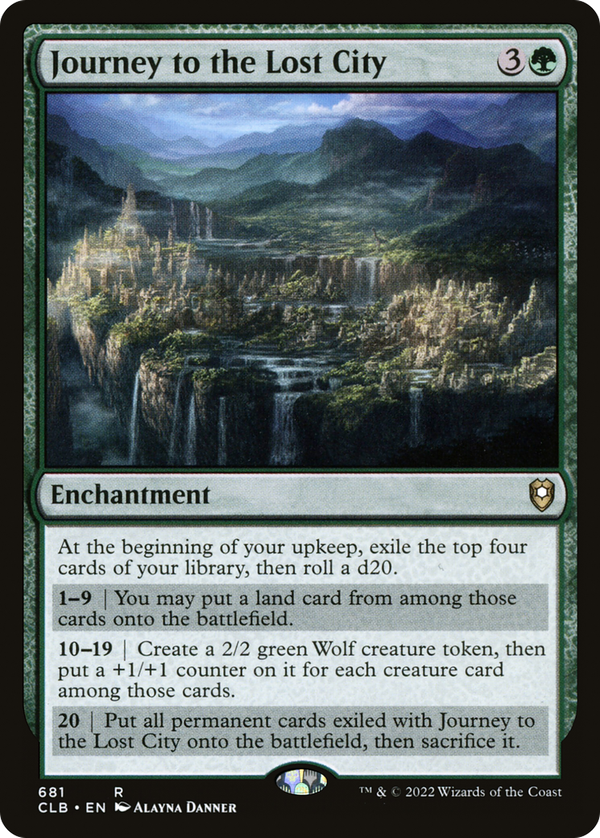
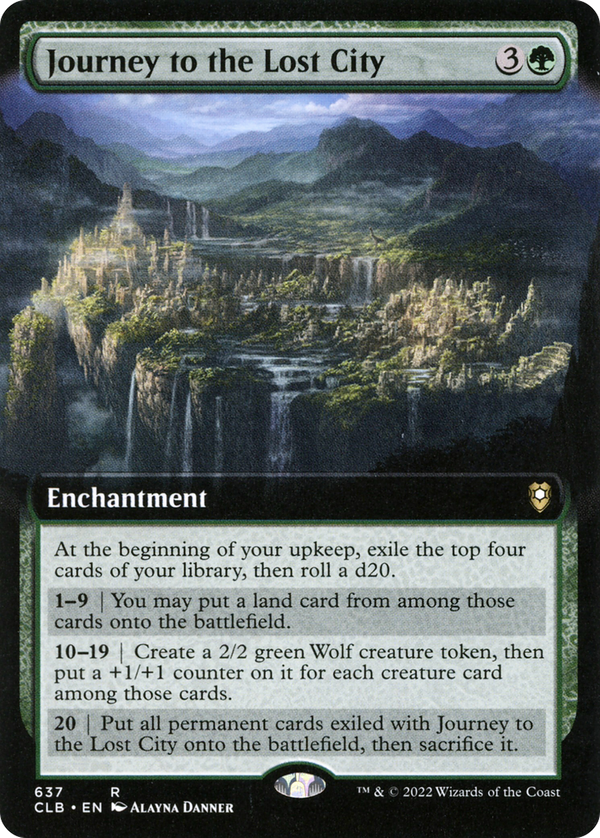
Journey to the Lost City


The die is the whole engine, and it turns a slow ramp enchantment into a payoff that resolves differently every upkeep. Most impulse-value cards let you cash in what you exile right away; here the four exiled cards sit in limbo, and the roll decides what you actually extract while the rest stay parked under the enchantment. The low band is the ramp floor: dig four, drop a land, keep your draws honest against flood. The middle band, where the d20 lands most of the time, mints a fresh Wolf that scales with the creature cards you flipped, so a creature-dense build turns a filler token into a real body. Crucially, neither the low nor the mid result touches the exile pile beyond the single land the low band may pull: a token is created new, not lifted from exile, so every other permanent stays reserved. That reservation is what makes the 20 the jackpot the earlier rolls quietly stock. A natural 20 dumps every permanent still exiled onto the battlefield at once, then sacrifices the enchantment. The structure rewards patience in an unusual direction: the longer you fail to roll the 20, the deeper the exile pile grows and the more the 20 is worth. It is dice-matters design built to answer the standard objection to randomness, that a bad roll should feel like a wasted turn, by letting even the low outcomes advance your board while banking the swingy payoff for the roll everyone wants.