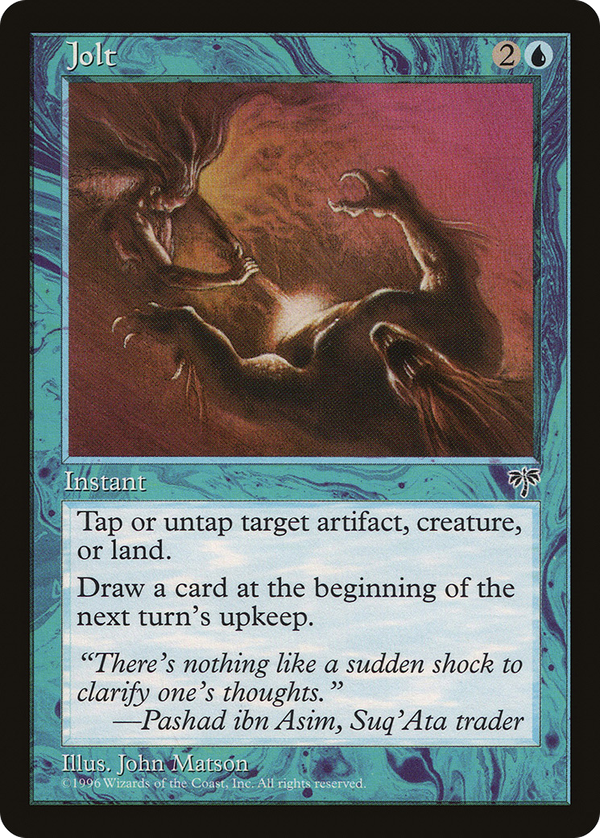
Jolt


A cantrip wearing a Twiddle costume. The tap-or-untap clause is the kind of low-impact utility that early design treated as a real effect: untap a land for a mana, tap down a blocker before combat, untap an artifact to re-fire it. None of that would carry a three-mana instant by itself, which is why the second line is what the card is actually for. The draw, deferred by a delayed triggered ability that fires on the next turn's upkeep rather than resolving immediately, is the tell of the era's caution about card advantage: you pay three mana, you get a marginal battlefield nudge now and a card a turn later, and the delay was meant to keep the cantrip honest. By modern standards the rate has aged out; cheaper, cleaner cantrips made the whole class obsolete. But the structure rewards a second read, showing how Wizards once priced "draw a card" as something that needed a chaperone effect and a full turn of friction before it could ride on a three-mana instant. The tap effect was never the point; it was the excuse that let the cantrip exist.