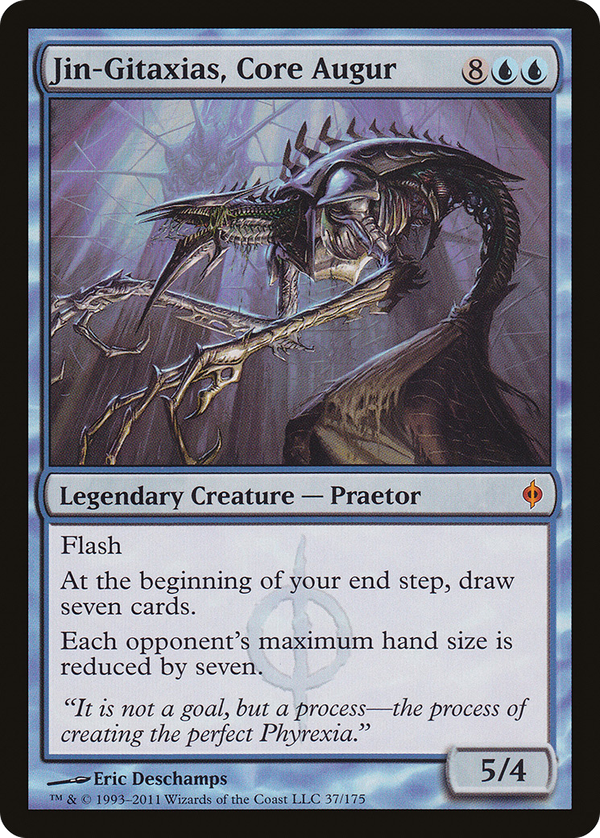
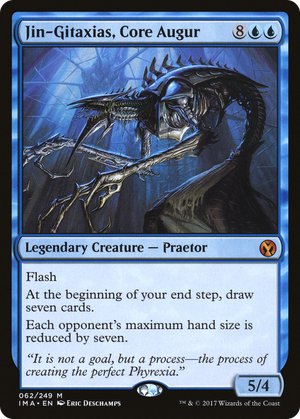
Jin-Gitaxias, Core Augur


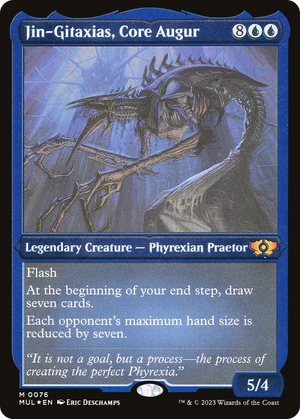
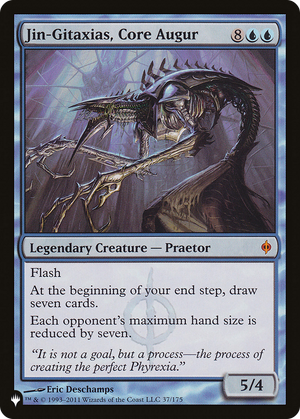
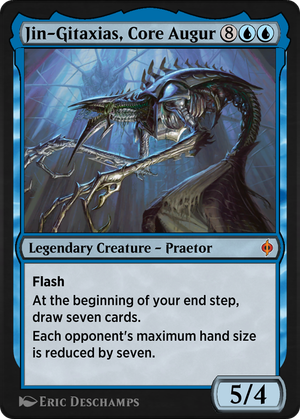
Ten mana for a 5/4 reads like the setup to a joke about overpriced card draw, but the body is beside the point: this is an engine that, once it sticks, adds seven cards to your hand at the beginning of each of your end steps while gutting what your opponents can keep across turns. The flash is the load-bearing word. Cast it on an opponent's end step and you skip a turn of summoning-sickness exposure; even cast on your own main phase it triggers that same turn's end step, so it is never a dead arrival. The static clause does its work the instant the creature resolves, dropping each opponent's maximum hand size by seven, which for most decks means zero cards held between turns. The asymmetry is total: you are flooding your grip while they are forbidden from banking anything, so a draw-go opponent bleeds resources to the discard clause whether or not you ever attack. The cost is the entire balancing act. Ten mana means this belongs to decks built to cheat it onto the battlefield or to long games already tilting your way, where a fresh seven a turn is overkill on a board you are winning. The praetor designs of this era leaned on near-unbeatable payoffs gated behind enormous costs and bodies that fold to a single removal spell. This is the blue entry, the cycle's purest statement of raw card advantage, and a creature that threatens to bury the game the moment it survives to your next end step.