Jarl of the Forsaken


The condition is doing all the work here, and it is a demanding one: the removal only lands on a creature or planeswalker an opponent controls that was already dealt damage this turn. That routes the card straight into combat math. Flash lets it ambush an attacker after blocks, when a creature has been dinged but not killed, and finish the job while leaving a 3/2 body behind. It reads less like a Terminate and more like a combat trick that stays on the battlefield, a bit of ping-and-remove logic that rewards a board where damage is already flying. Foretell then patches the one real liability of a conditional flash creature, which is the dead turn spent holding it: exile it early for a small down payment, then flash it back at a discount when the window opens, splitting the cost across turns while a face-down card hides your intent. The two mechanics answer each other cleanly. Flash asks you to keep the card up and wait for the right damage; foretell makes that waiting cheaper and less telegraphed, since exiled cards from this era all look identical from across the table. The result is interaction that lives entirely in the timing layer: worthless in a vacuum, precise when the board is contested, and built to be held rather than cast on curve.
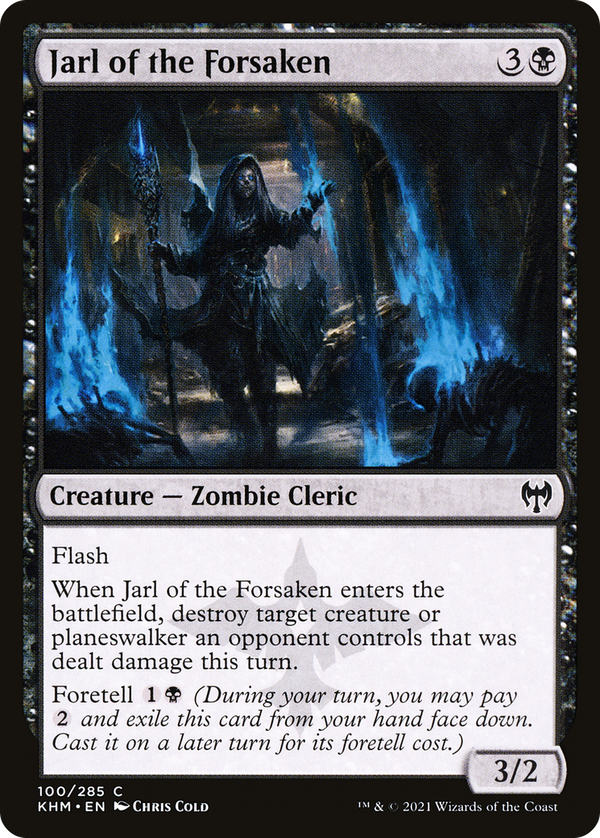
Rules text
 (During your turn, you may pay
  and exile this card from your hand face down. Cast it on a later turn for its foretell cost.)