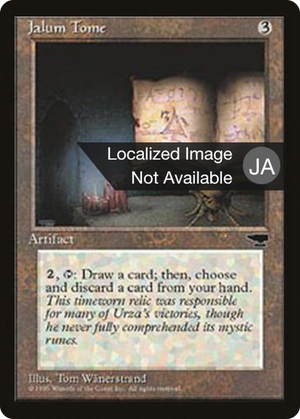
Jalum Tome

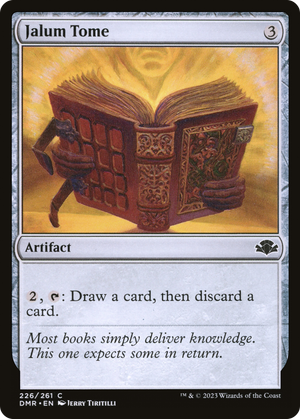
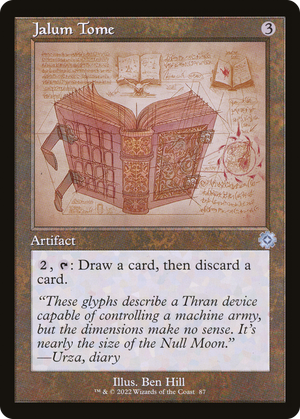
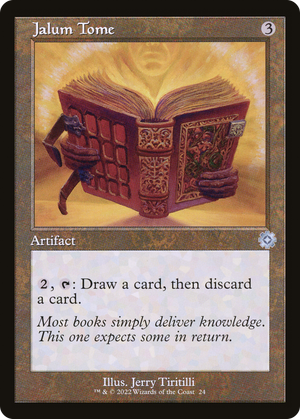
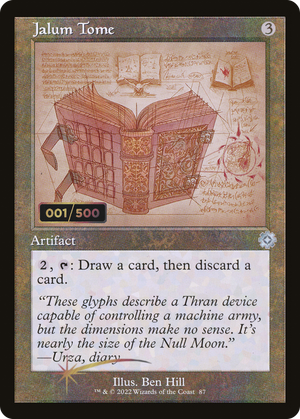
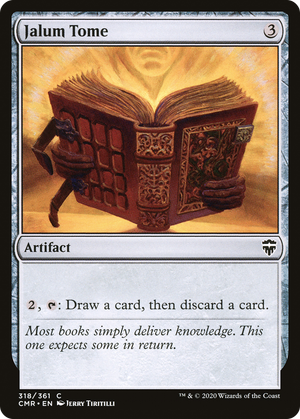
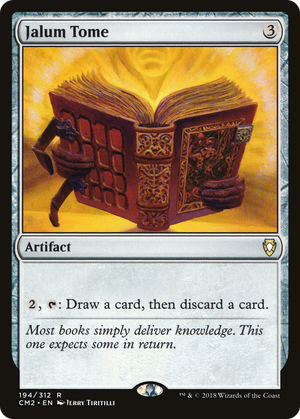
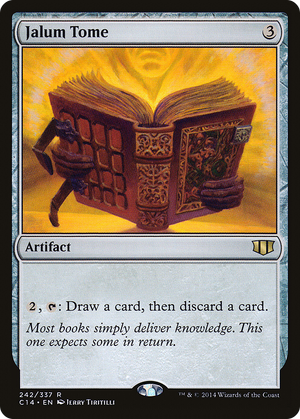
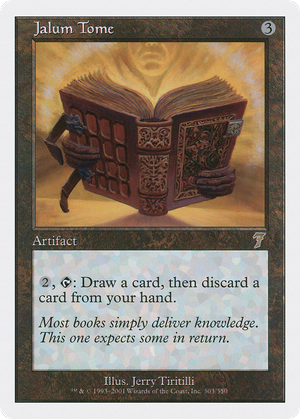
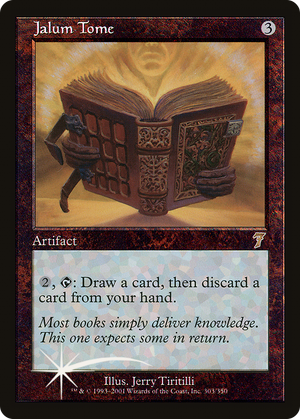
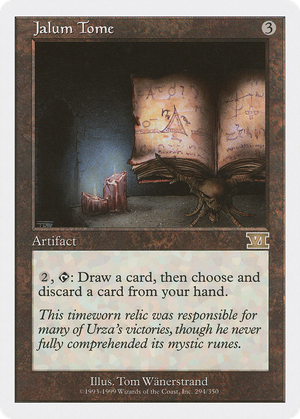
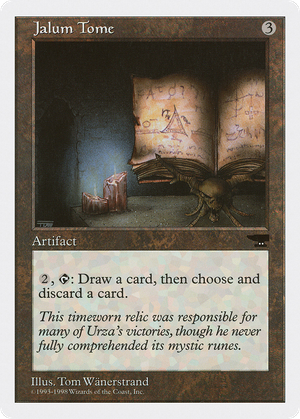
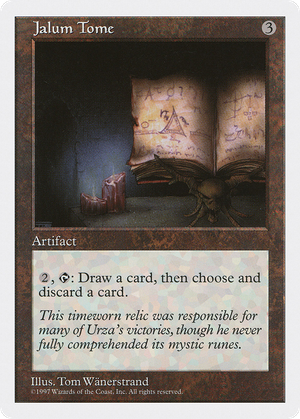
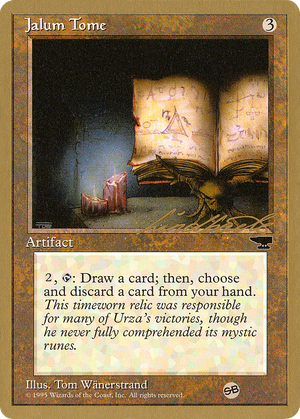
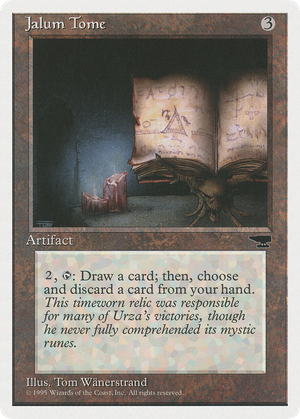
The looting effect, at its earliest and clearest. Before Merfolk Looter, before Faithless Looting, before the verb itself had a name on the cards, this was how a deck cycled through dead draws: pay three to deploy, then tap and pay two more to swap one card for another. The rate looks brutal by modern standards (five mana and a tap for a single loot), and the filtering is fragile in an era that did not yet prize the graveyard as a resource. But the activation order is exactly the one graveyard decks would later want: you draw first, then discard, which means you see the new card before deciding what to pitch. That is the looting half of the loot-versus-rummage divide, the version that hands you maximum information before committing a card to the bin, and it is strictly better for setting up a known graveyard than rummaging would be. The load-bearing thing here is the design idea: colorless card filtering, attached to a permanent, repeatable across turns, sold at a price most decks of the period could stomach because they had no other recourse against a clogged hand. That made it a genuine tool, and it points at a lineage that runs through Jayemdae Tome, its draw-only cousin from the same era, all the way to the cheap looters that define modern graveyard decks. The Book subtype is a flicker of vestigial type-line flavor from when artifacts were still being sorted into categories, attached to only a handful of cards, most studied now as fossils of how the game first learned to manipulate its own draw step.
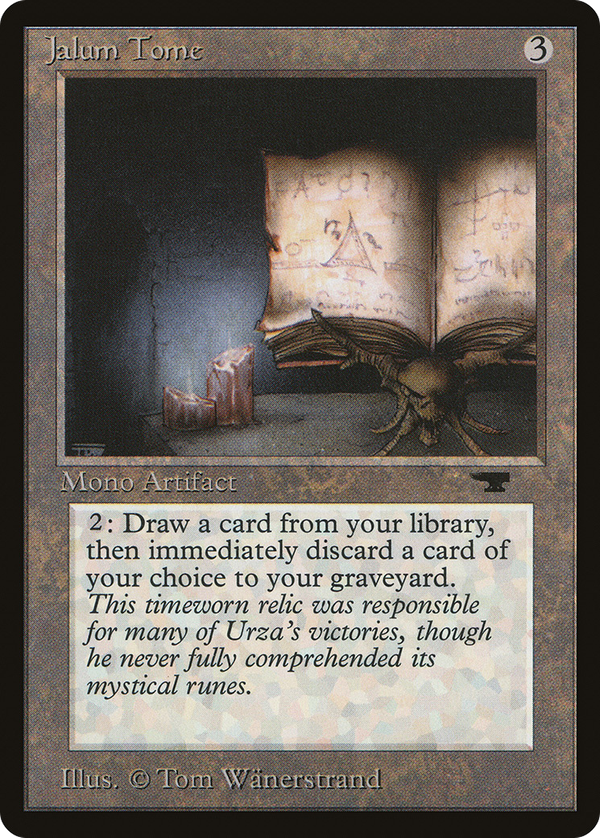
Rules text
 ,
,  : Draw a card, then discard a card.