Jacob Frye


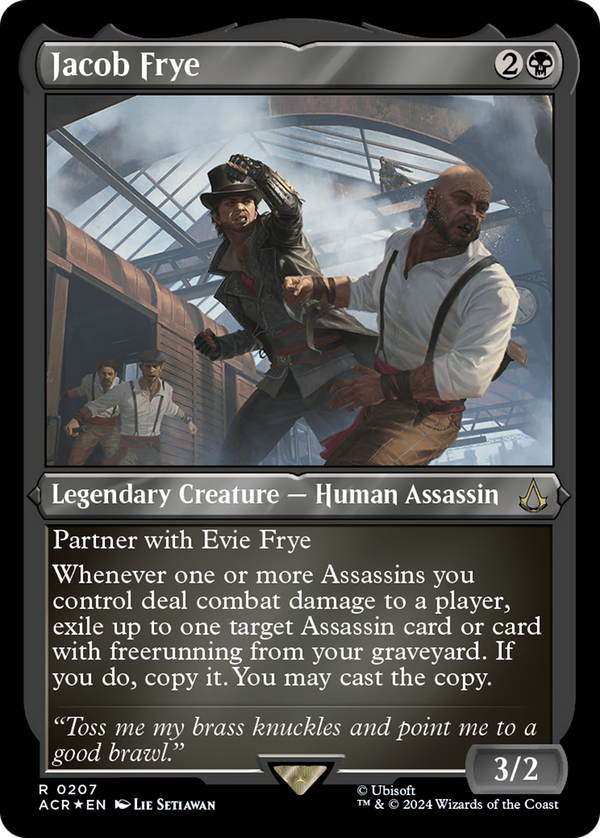
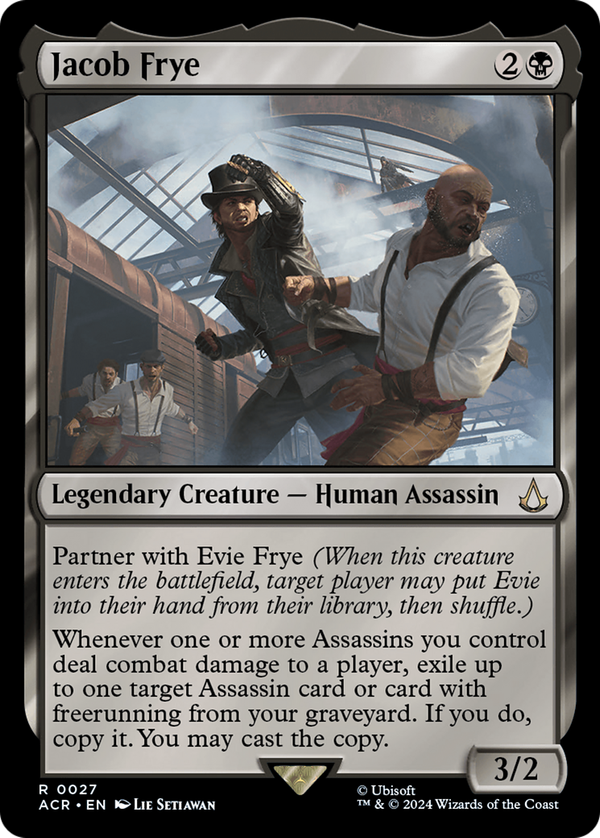
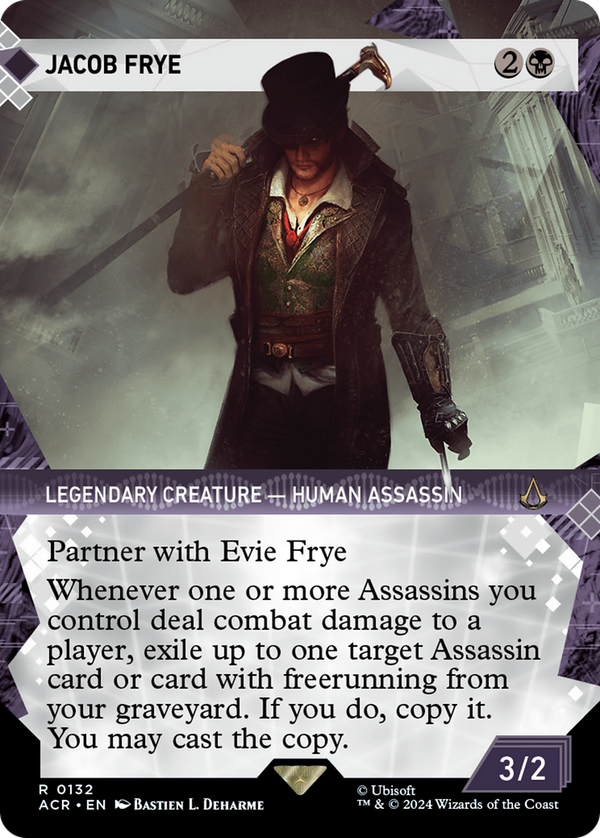
The recursion engine here keys off combat connecting, not the graveyard's contents in isolation, and that reframes how the deck plays. The trigger asks for at least one Assassin to land a hit on an opponent, then reaches into the yard to exile a spent Assassin card or a card with freerunning, copies it, and offers the copy for casting. Critically, it checks per player damaged in a combat, so a wide board that connects with multiple opponents fires the exile-and-copy multiple times in a single combat step: the plan rewards keeping bodies alive and spread across the table rather than sacrificing them, and the fuel is anything that has already died or been discarded. Freerunning is the wrinkle that widens the pool beyond the Assassin type, letting non-Assassin cards feed the same machinery. The partner-with clause is the quieter piece of the design: rather than the symmetric partner keyword that lets any two commanders pair freely, this hardwires the pairing to Evie Frye and tutors her into hand on entry, treating the two halves as a designed unit rather than a modular choice. The 3/2 body is fragile enough that the plan hinges on connecting before the creature trades, the pressure that keeps a repeatable copy engine from running away. What the card is really doing is turning your graveyard into a second hand you spend a combat trigger at a time, gated by earning each trigger through damage rather than paying for it.