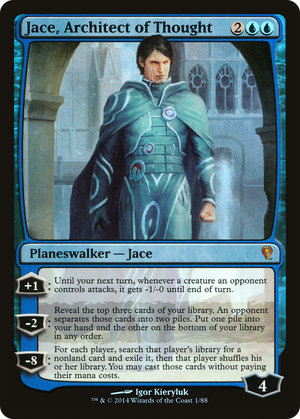
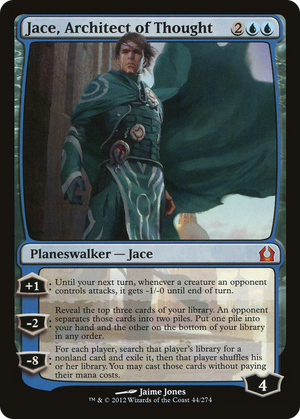
Jace, Architect of Thought


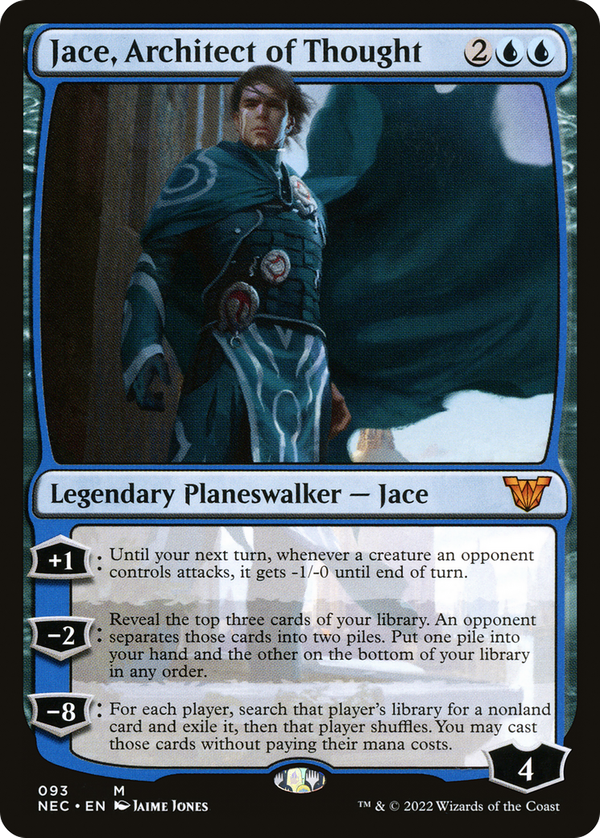
The pile-separation menu on the -2 is one of the more elegant pieces of card-advantage design ever stapled to a four-mana planeswalker: you reveal three, the opponent sorts them into two piles, and then you take whichever pile you want. The fairness is theatrical, not real. There is no good split for the opponent, only a less-bad one, because they are forced to choose between conceding you the single best card alone or the two next-best together, and you make the final call either way. That structure makes the ability feel collaborative while it strictly advances the Jace player, the kind of texture planeswalker design reaches for and rarely lands.
The rest of the card exists to keep that engine alive. The +1 is neither a fog nor a Propaganda tax: it shaves a point of power off each attacker for a turn, which blunts a wide assault and protects loyalty without ever stopping a determined alpha strike, so the card stays vulnerable in the way a fair planeswalker should be. The -8 is the obligatory game-ender, the "pull the best card from every library and cast it for free" payoff you reach only after the +1 has ground the opponent down. The whole frame is a control centerpiece that buys card advantage and tempo at four mana while asking you to defend it the honest way, with bodies and a clock rather than an off-switch.