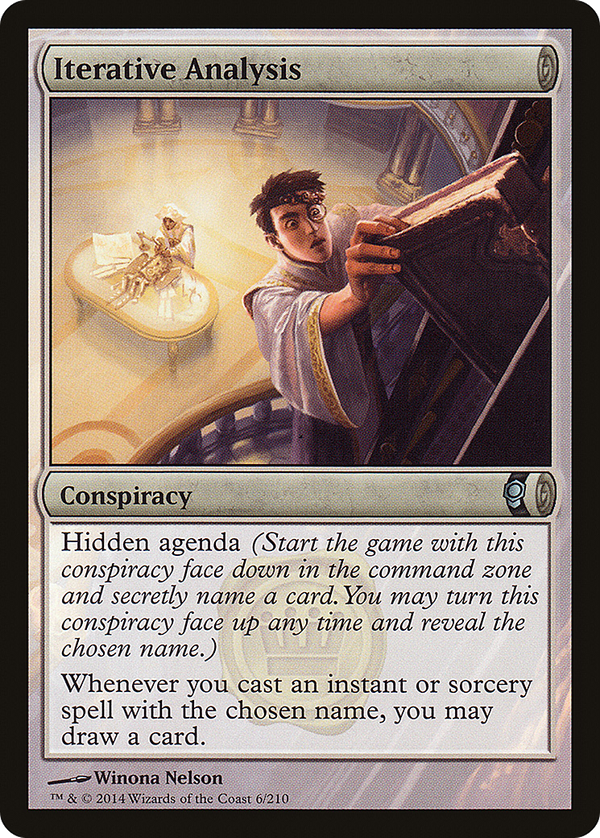
Iterative Analysis
Among the conspiracies that reach across the table to touch your own deck rather than the draft pool, this one names the most fragile reward: a card draw bolted onto a spell you must have decided to lean on before the first card is drawn. Because the name is locked in at the start of the game, you already know your exact decklist; the only choice is which instant or sorcery you expect to cast often enough to make the trigger fire more than once. That is the whole bet. Name a one-of and the conspiracy is dead weight; name the high-density spell you intend to win with and it pays out repeatedly. The hidden-agenda secrecy, normally a tool for bluffs and information control, does almost no work here, because the payoff is so narrow that an opponent has nothing to fear in the reveal. Where other conspiracies of this kind manipulate the table or hide a threat, this one rewards self-knowledge over deception: the chosen name is a public statement (once flipped) about how you mean to grind out a game, a commitment made before a single draw step. The lever is not the secrecy and not the timing; it is whether the deck you brought actually wants to cast the same spell again and again.