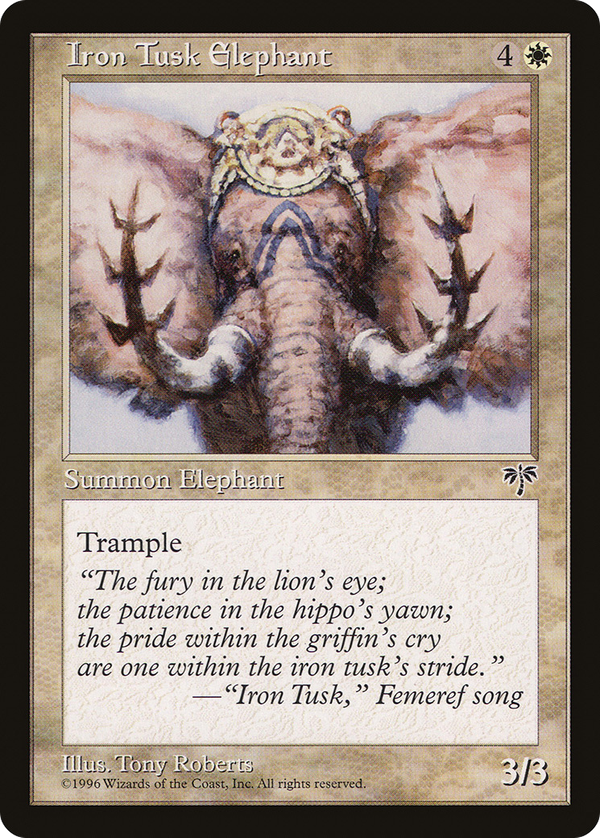
Iron Tusk Elephant


Trample is the only thing separating this from the strict-vanilla list, and even that keyword does almost nothing on a body this size: a 3/3 is too small to reliably push damage past anything but the most token-sized blockers. The card's real subject is the unglamorous work of setting a power level. When it was printed, efficiency curves were still being calibrated, removal was slower, and a common-rarity white beater that could occasionally spill a point or two past a chump block was at least worth a look. There is no design wrinkle here and no archetype it anchors. Its function was to fill out an aggressive white curve at common, and its lasting role is as a marker of where the rate floor sat before the squeeze: five mana for a 3/3 with trample is the kind of number that the next decade of design would push past so thoroughly that the card became shorthand for how loose early commons could be. It is a baseline, but the baseline below which everything later improved, not a bar anyone struggled to clear.