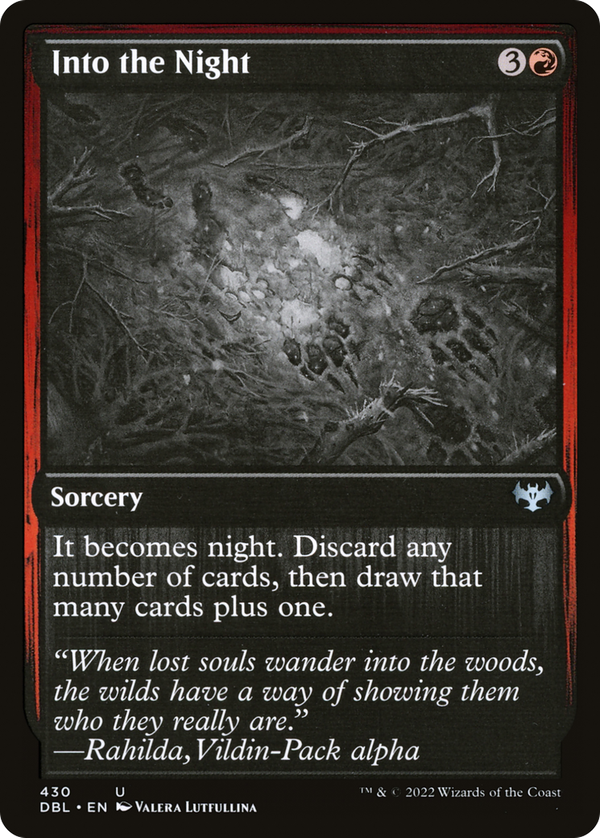
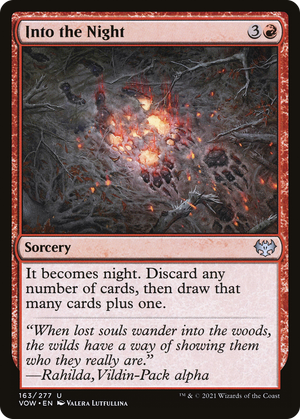
Into the Night


Strip the becomes-night rider and what remains is filtering: pitch any number of cards, refill to one more than you tossed. Cast it discarding nothing and it draws one; dump a fistful of dead cards and dig deep. The load-bearing detail is that this is parity, not advantage. You spend the card to cast it, discard X, draw X plus one; count it out and your hand ends where it started. The plus-one refunds the spell itself rather than generating raw cards, which is exactly what keeps this from being loss instead of a wash. That distinction governs where it belongs: it never produces velocity the way a repeatable engine does, so it earns its slot only in a shell that treats the discard half as an asset (graveyard payoffs, flashback fodder, fatties to reanimate later) rather than a tax paid for card selection. Red's answer to blue's clean draw has long been this trade: you choose what leaves the hand before the refill arrives, buying selection with tempo and a sorcery-speed window. The night flip sits on top as a payment to its cycle rather than a standalone drawback; whether flipping helps or hurts is a question your other cards answer, not this one. A one-shot rummage with a rider, honest about what it is: motion, not gain.