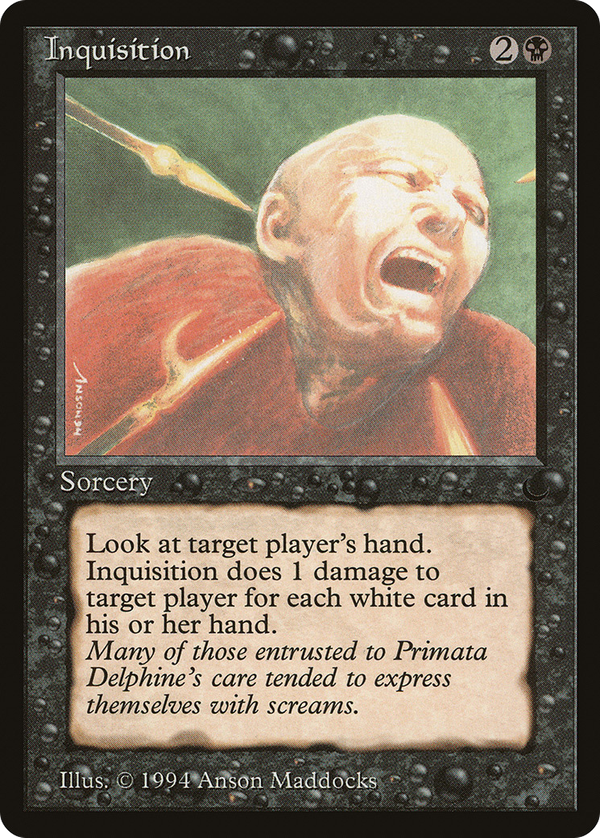
Inquisition


The whole effect hangs on a count of white cards in the opponent's hand, which means the damage it deals is a property of what they happened to draw, not anything the caster controls. Against a deck running no white, it reveals the hand and accomplishes nothing else; against a heavy white hand it can deal a surprising chunk, but only when you least need the burn and least need the information. The name promises interrogation, and the reveal-the-hand clause delivers it, but the payout was wired to a metagame variable nobody can plan around: it punishes color choice rather than stripping a resource. This is the asymmetric, opponent-dependent damage the design culture of the era kept experimenting with before settling on the cleaner template black hand-disruption would inherit, where you look at the hand and then take a card, the information serving the decision instead of feeding a damage formula. What makes Inquisition worth a second look is precisely that it is a road not taken: a moment when revealing a hand was a means to deal damage based on what an opponent was holding, not yet a means to make them discard it. The later discard spells solved the same itch by reframing the question entirely.