Information Dealer


Library manipulation that scales with tribal commitment gave Wizards a self-referential payoff during an early tribal-matters era, and the execution is unusually clean for the period. The smoothing is genuine but slow: a lone copy looks at a single card, barely ahead of the scry that did not yet exist when this was printed, but four or five Wizards on the board lets you reorder deeply enough to script draws several turns out. Its limitation is that it touches sequencing, not card advantage; you fix the order of what you draw without drawing any of it, and the tap cost means the body that smooths your deck is also the one you would rather be attacking or blocking with. So the card asks for a deck already saturated with the creature type it counts and gives almost nothing to one that splashes a single blue Wizard for incidental value. The 1/1 frame keeps it a tribal engine rather than a clock, manufacturing consistency while it sits back. It belongs to the line of reorderers the game later compressed into scry and eventually surveil; the difference is that those bake the payoff into the printed text, while here the depth of the look is gated behind a board state you have to assemble first. That gate is the trade the whole tribal-matters design philosophy was built on.
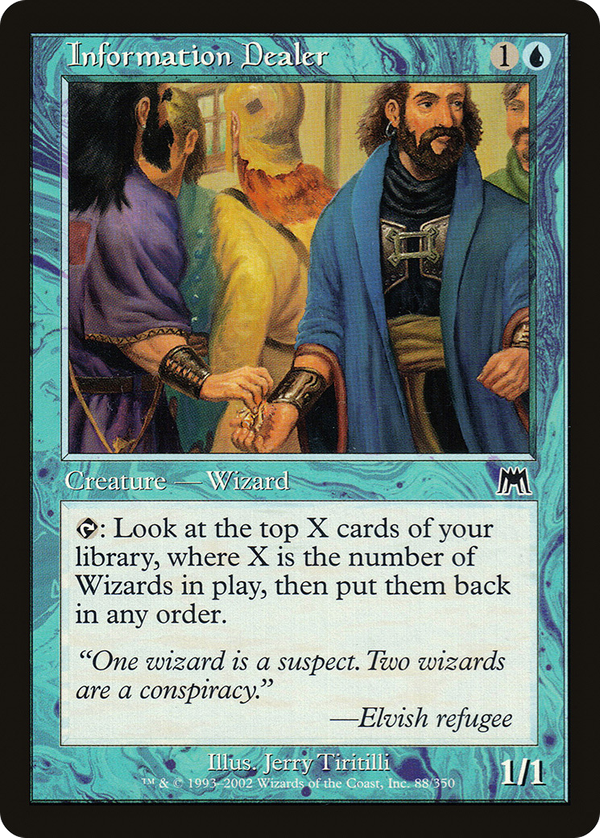
Rules text
 : Look at the top X cards of your library, where X is the number of Wizards on the battlefield, then put them back in any order.