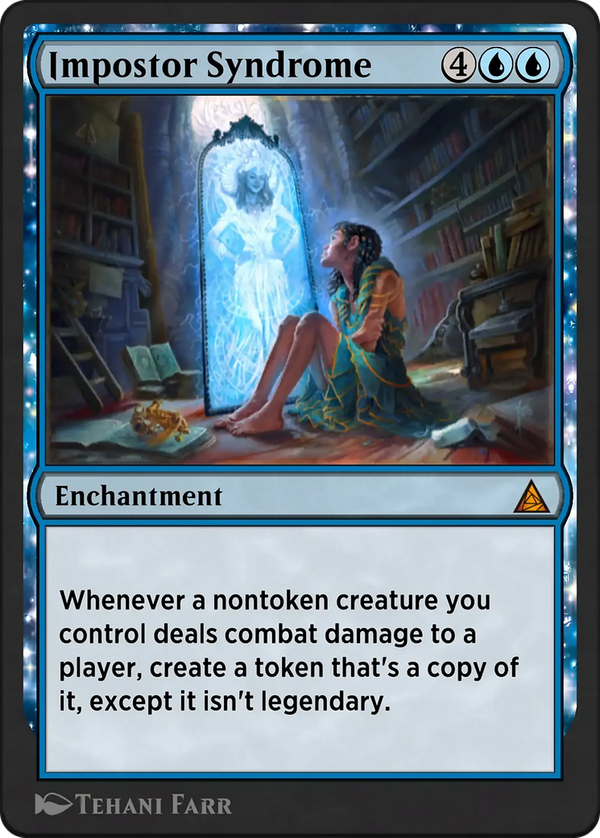
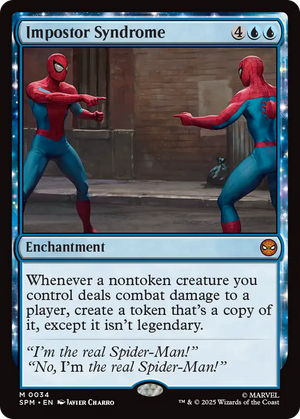
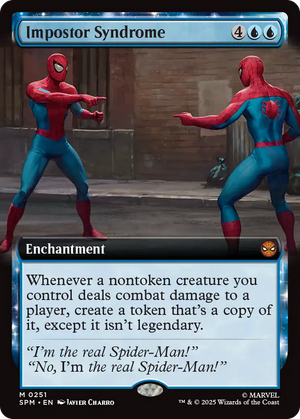
Impostor Syndrome


Most token-doublers duplicate creatures as they arrive, converting a cast trigger or an enters-the-battlefield moment into a second body. This inverts that instinct: the payoff is metered by combat, not casting. The enchantment sits idle until an attacker connects, then spawns a full copy the instant the combat damage step resolves, compounding every profitable swing into a fresh body on that same turn. The legendary-stripping clause is the load-bearing detail. It exists so you can point the trigger at your best legendary threat and stack copies that would otherwise collapse under the legend rule, turning a single unique bomb into a widening board of non-unique duplicates. That one line is the difference between a dead card on the wrong creatures and a genuine snowball on evasive ones. The nontoken restriction keeps the growth linear rather than runaway: the copies it makes cannot themselves trigger the enchantment, so each attacker adds one new body per connection instead of doubling the doublings across turns. What it asks of a deck is narrow: bodies that reliably land damage, whether through evasion, unblockable effects, or simply flooding past blockers. Hand it a creature with an enters-the-battlefield payoff or a game-ending stat line and each connection duplicates that value outright, but the enchantment does nothing to protect the attacker or force the damage through. It is an amplifier with no engine of its own, and the deckbuilding tension lives entirely in supplying the connections it cannot manufacture.