Immobilizing Ink


Most tap-down auras pin a creature flat and close the conversation: this one hands the leash back to the defender, for a recurring price. The first clause is pure lockdown, refusing the creature its untap step in the spirit of Pacifism. The second clause then sells the untap back, but each turn the controller wants that body to attack or block, they pay one mana and pitch a card. That converts a binary effect into an attrition tax. Against a creature the opponent genuinely needs, the aura forces a recurring choice: pay the toll in mana and cards to free it, or leave it tapped and concede the tempo. The logic suits the slow, graveyard-fed designs of the era it comes from, where discard was rarely pure loss and bleeding the hand mattered as much as removing the threat. The weakness is structural to the form: a single bounce or sacrifice effect refunds the opponent's worries and wastes the two-mana investment, and the untap clause cuts unevenly. A player flush with cards barely registers the cost of freeing the creature, while a player already running dry has nothing left to feed it and watches the body sit. As a removal substitute it is unreliable; as a slow drain against a hand on its last cards, it grinds in a way a clean lock never could.
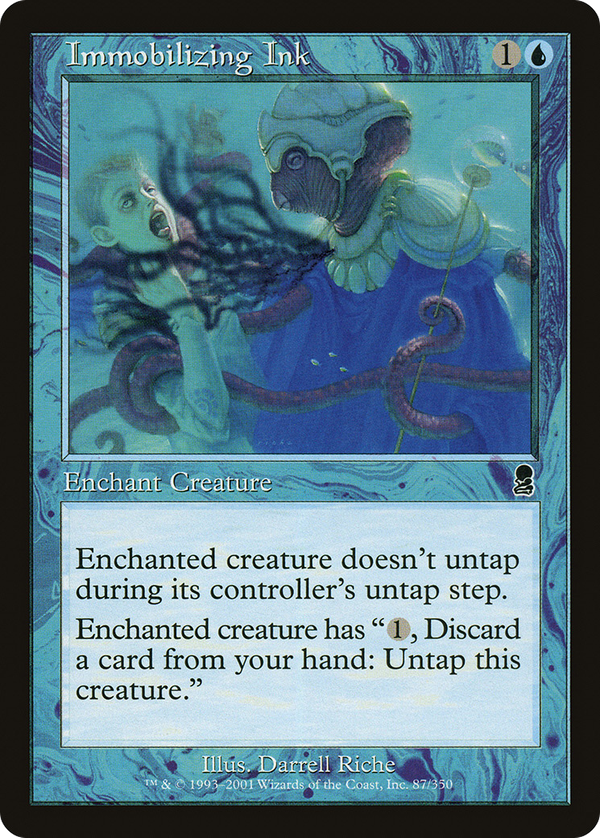
Rules text
, Discard a card: Untap this creature."