Illicit Masquerade


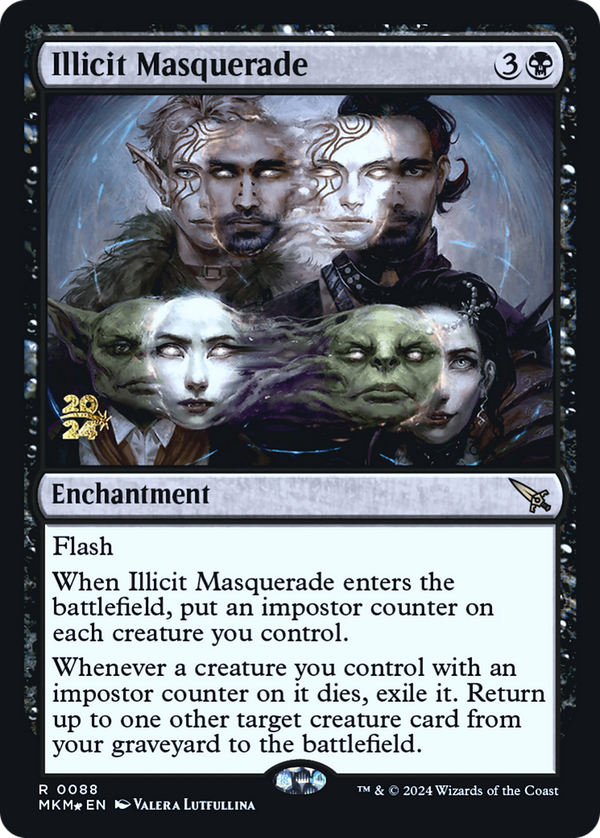
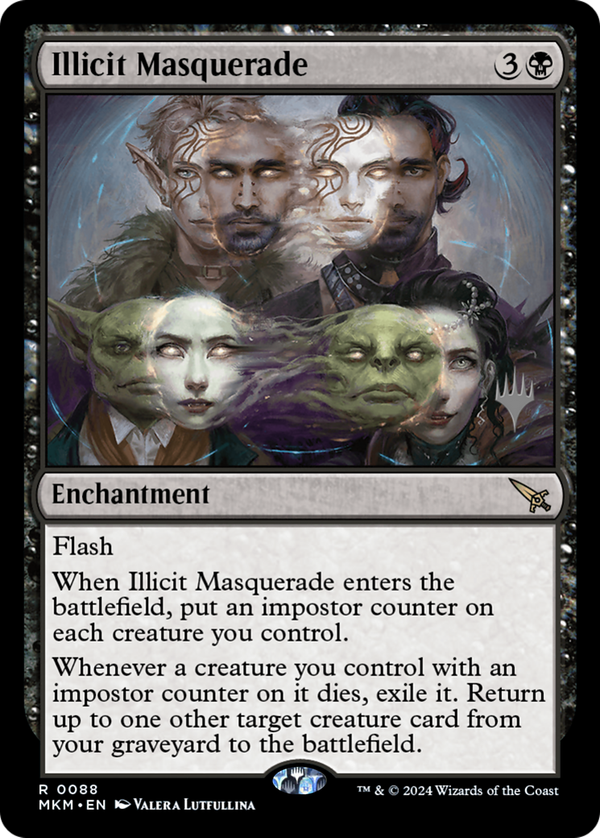
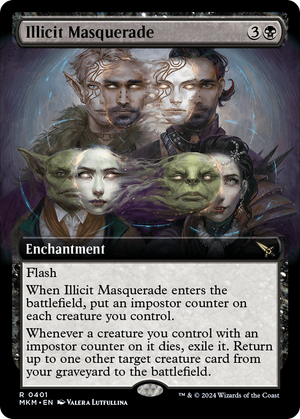
The design trick here is that the impostor counter turns your entire board into a delayed reanimation trigger. Marking each creature you control when the enter trigger resolves means every subsequent death does double duty: the marked body leaves for exile, and something better crawls back from the graveyard in its place. This is the kind of engine that punishes an opponent for interacting at all. Point removal at your creature and you have not answered a threat; you have upgraded it, swapping a dead one-drop for the fatty sitting in your bin. Flash is what sharpens the whole thing into a trap. Because the counters land at instant speed, you can leave the enchantment uncast through a combat step or a sweeper, then let the incoming losses feed a graveyard-fueled comeback: a board wipe that should reset the game instead refuels the side that saw it coming. The friction is that the exile clause caps the loop: each impostor-marked creature exiles itself and then returns up to one card, so this is a value converter rather than a repeatable sacrifice engine. It wants a graveyard already stocked with better bodies and a way to feed creatures into the mill, not a single treasured creature to loop. Structurally it belongs to the black tradition of turning death into advantage, but where most reanimation spends a card to answer a card, this one restages an entire battlefield's worth of dying in a single resolution.