Ichorid


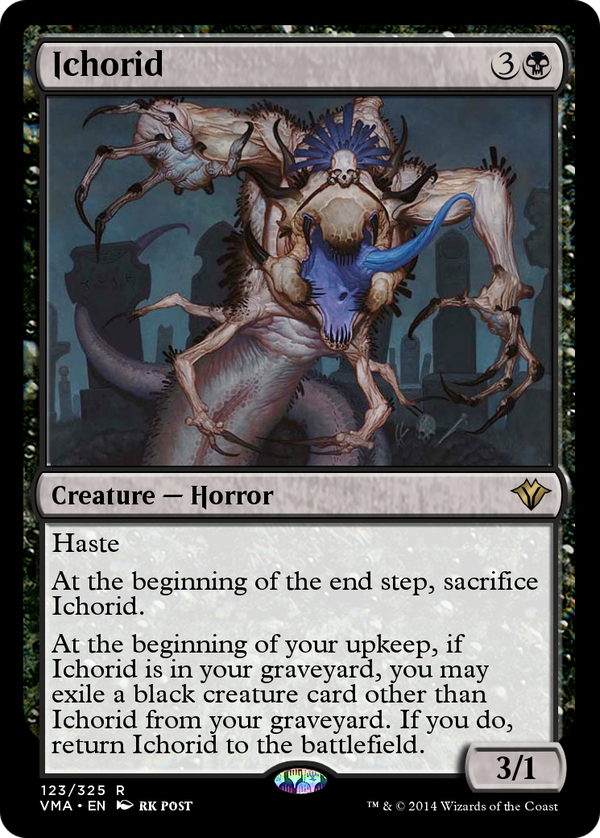
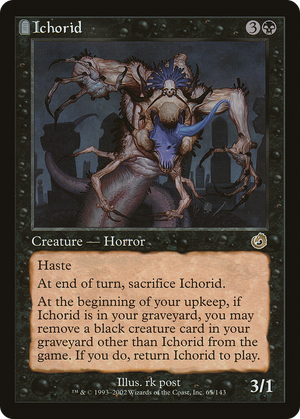
What looks like a fragile beater is actually a recursion engine that stops asking for mana the moment it first reaches the graveyard. The end-step sacrifice clause means it always returns to the yard at the close of any turn it attacked, and the upkeep trigger reanimates it for free by exiling another black creature card. The whole thing runs on graveyard fuel rather than the battlefield or the hand, which is why it became the keystone of the dredge-and-discard archetype that bears its name. Discard and self-mill refill the yard each turn, supplying both the engine's body and the exile fuel its upkeep trigger demands; the more black creatures you bin, the more recurring three-power hasty attacks you bank. The design tension is recursion-via-attrition: every reanimation eats a card from the graveyard, so the loop is self-limiting unless the deck restocks the yard faster than this consumes it. That dependency is the price for a creature that, once it reaches the graveyard, returns every turn for free and shrugs off any removal that does not exile. It predated dredge as a keyword by years, yet it reads like an early sketch of the design space dredge would later formalize: a card whose entire value lives in the graveyard, recurring as long as the graveyard stays stocked. Nobody who built around it was paying the four-mana hardcast; the real plan was always to discard it and let the upkeep trigger do the work.