Hundroog


Cycling existed to solve the dead-draw problem for exactly this kind of card: a big, slow ground-stalling body that wins games when it lands and clogs hands when it doesn't. The 4/7 is a genuine wall, the kind of toughness that blanks most early aggression and stonewalls attackers far larger than it could ever kill, but seven mana is a real cost and there are plenty of board states where a fresh card beats a beast you can't afford to cast. The  cycling cost is the release valve. It sets the floor at "draw a card for three mana," which means the card never truly bricks: early it's a cantrip you didn't want to keep, late it's a defensive anchor. That dual nature explains why the keyword got layered onto so many of the era's chunky midrange creatures rather than reserved for spells. As a body it is unremarkable on the rate, and the cycling cost is steep enough that you would never lead with it as a draw engine. What it represents is a design philosophy that bulky green commons could carry their own insurance policy, so that a hand full of expensive beasts never meant a hand full of cards you couldn't deploy.
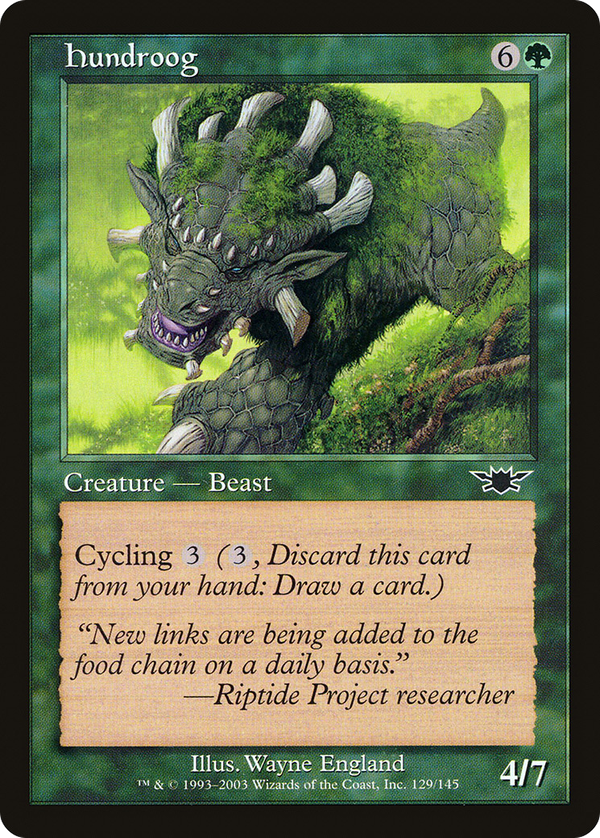
Rules text
(, Discard this card: Draw a card.)