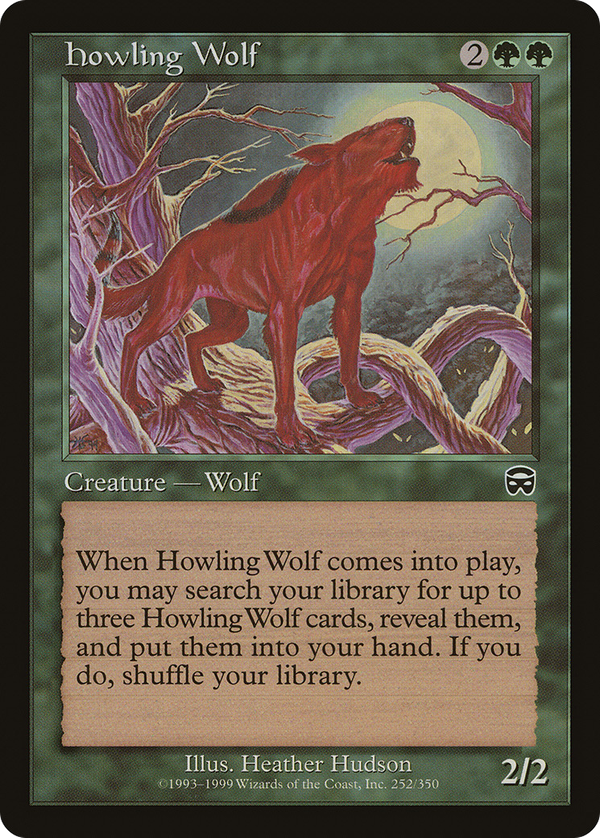
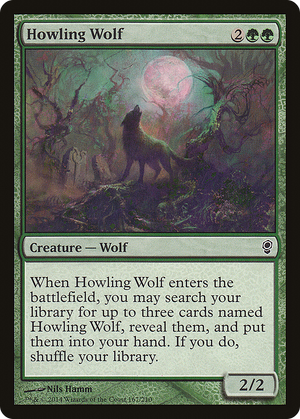
Howling Wolf


The plain 2/2 body is the toll you pay for a deckbuilding promise: run four copies, and the first one you draw fetches up to three more straight to hand, so a tribal-style deck rarely runs dry on bodies. This is the green entry in a small early-era cycle of commons sharing the same trick, an enters-the-battlefield search that fetches up to three more copies of the card it sits on, each named for its own creature. The trigger does generate raw card advantage (three cards from library to hand), but the shuffle clause stops it from snowballing into a real engine: it resets the library after every fetch, and because everything you pull is just another Howling Wolf, you are widening a board rather than digging for an answer. The cycle was exploring consistency before scry, before London mulligans, before the modern library-fixing toolbox existed: rather than selecting the card you need, you guarantee the cards you already chose to bring. So this is closer to a unit of redundancy stapled to a creature than a creature proper, which is why it reads so flatly alone and only earns its slot in the plural. It is a museum piece of a particular design notion: that a creature could tutor for itself, the question and the answer folded into a single common, then quietly shelved once cleaner consistency mechanics arrived to do the same job.