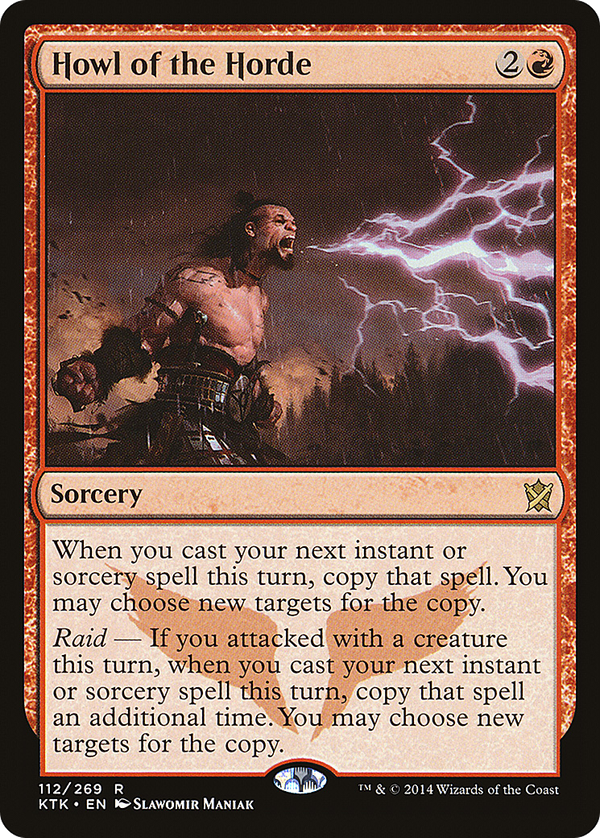
Howl of the Horde


Spell-copying usually lives at one of two extremes: a one-shot fork stapled to a specific spell, or a permanent doubler that warps a whole deck around it. This sits in a stranger middle. Cast it on its own and nothing happens; the payoff is loaded onto the next instant or sorcery you cast that same turn, which means the card is really asking you to spend three mana now and a second spell later, all inside one window. The cost is sequencing, not waiting: if no follow-up spell ever lands, the delayed trigger simply expires, its banked copy quietly forgotten rather than wasted on the stack. The raid clause is what tips it from a curiosity into a threat. An attack earlier in the turn adds a second copy on top of the first, so a single burn spell resolves three times (the original plus two copies), and a tempo-positive bounce sends three creatures home. The new-targets clause rewards the player who reads the board before committing: copies aimed back at the same face are worse than copies spread across separate threats. It punishes you for treating it like a generic value card and pays out handsomely for treating it like a combo piece, demanding that you assemble the attack, the mana, and the right second spell together. The reward scales with how much planning you front-load into that one turn, not how patiently you wait.