Horn of Plenty

Pay six mana to install a draw engine, and then watch the table line up to use it: the dividend goes to whoever is casting more spells, not whoever footed the bill. Every player gets the same option to buy a card off the back of any spell, which turns this into a group-hug piece almost by accident, an investment whose returns accrue to the room rather than the owner. The delayed draw is the quietly clever wrinkle: the card you purchase doesn't arrive until the next end step, so it never refuels you mid-turn the way a draw-on-resolution effect would. You pay the tax now and collect later, which stops the triggering spell from immediately chaining into its own replacement. This is card advantage built as a public utility, a design from the years when symmetry was treated as something players were trusted to break through deckbuilding rather than something walled off behind the owner's name. Modern engines that key off opposing spells almost always hide their benefit behind a "you may" that only the controller may use; this one hands the identical option to everyone and lets the spell-density war decide who actually profits. That makes it a symmetry to be solved instead of a drawback to be endured, and the puzzle of who out-casts whom is most of why it still earns conversation.
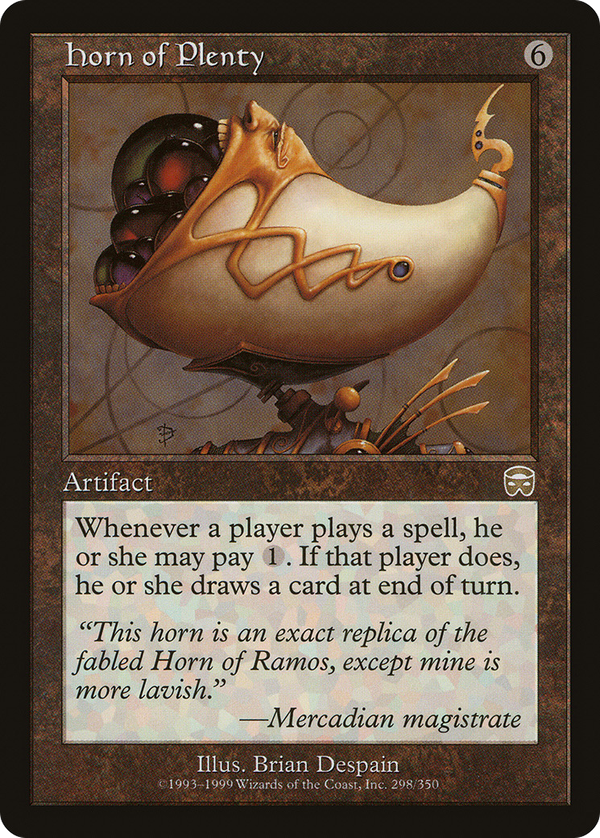
Rules text
 . If the player does, they draw a card at the beginning of the next end step.