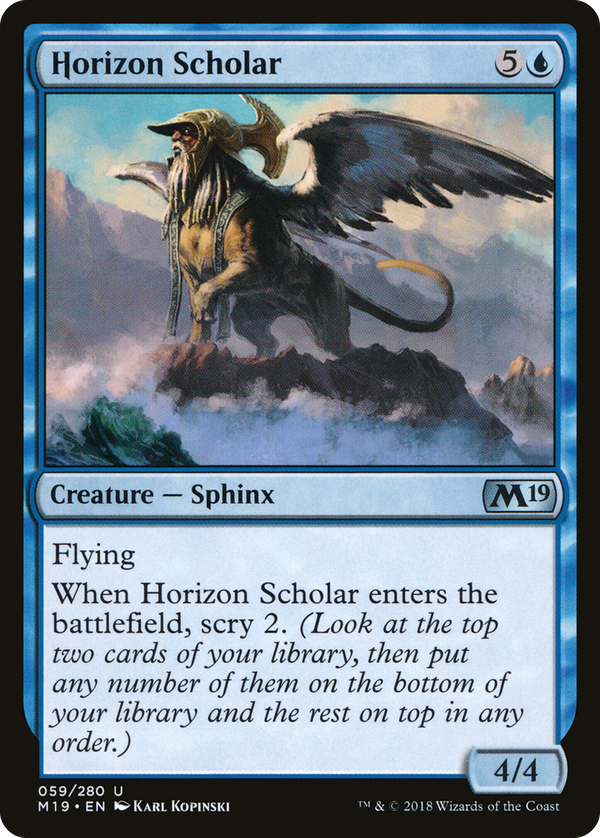
Horizon Scholar


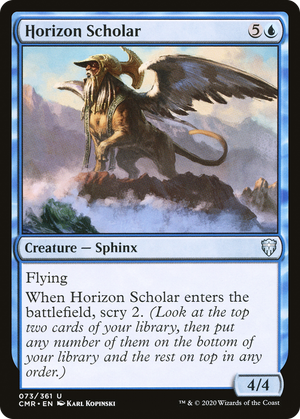
A 4/4 flier that scry 2s on the way down is the workhorse template Wizards reaches for whenever blue needs a top-end that closes games without asking for anything in return. The design is a clean split of labor: the evasive body is the payload, a clock in the sky that also blocks the fliers coming back the other way, while the scry 2 pays a small installment of card quality before the sphinx ever attacks, nudging the next two draws toward whatever the deck is short on. Nothing here wants a build-around or a synergy partner. The value is front-loaded and self-contained: a finisher whose entire contribution is legible the turn it lands, no setup, no follow-up, no strings. Designs like this age well because they make no demands. They set the floor for what a blue finisher at this weight is expected to provide, a body that flies over the board and tidies the library behind it, and that floor has stayed remarkably stable across the many shapes this effect has been reprinted in. The interesting thing is not that the sphinx is powerful but that it is a benchmark: the baseline rate against which flashier blue six-drops get measured, the version with the least text and the fewest conditions.