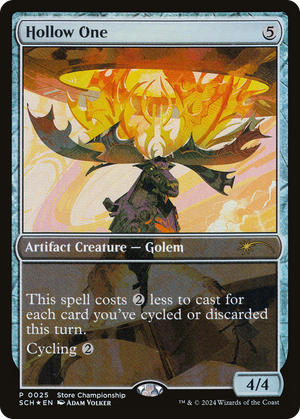
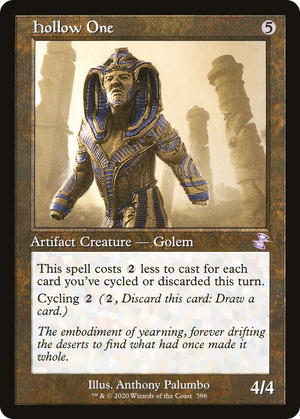
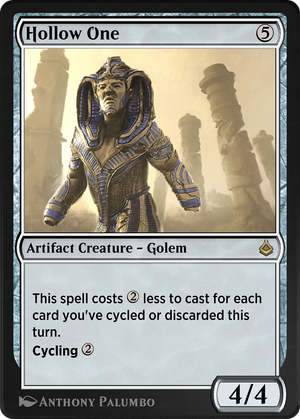
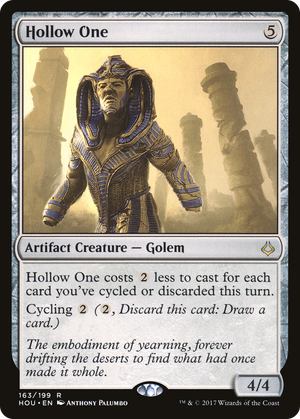
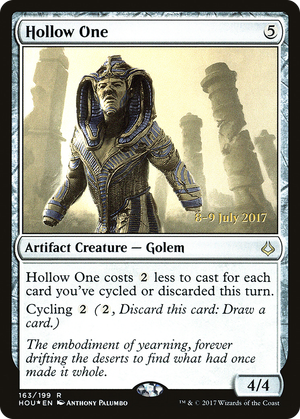
Hollow One

The five-mana 4/4 body is a fiction; nobody pays it. The real cost is whatever a turn of discarding and cycling has driven it down to, and once the reduction reaches full value the card becomes free, dropping a 4/4 onto the battlefield for nothing in the same turn you emptied your hand. That inversion is the whole design: it takes the discard and cycling that most cards treat as a downside (a price paid to dig, to loot, to fill the graveyard) and pays it back as raw tempo. The cost reduction is a static ability that applies while you cast the spell, checking how many cards you have cycled or discarded this turn, so the number is locked in the moment you announce it. Cycling on the card itself is the clever recursive move: with no other use for one, Hollow One discards itself to draw, and that same discard counts toward reducing the cost of the next. The key restriction, easy to misread, is that only cards leaving your hand count. A pile that dumps cards from the top of the library straight into the graveyard does nothing here; milling is not discarding. What it wants instead are the hand-emptying shells built to shed three and four cards a turn, where a glut of looters and rummagers becomes a glut of cheap or free 4/4s. Your mana bar stays untouched; the entire tax is paid in sequencing.
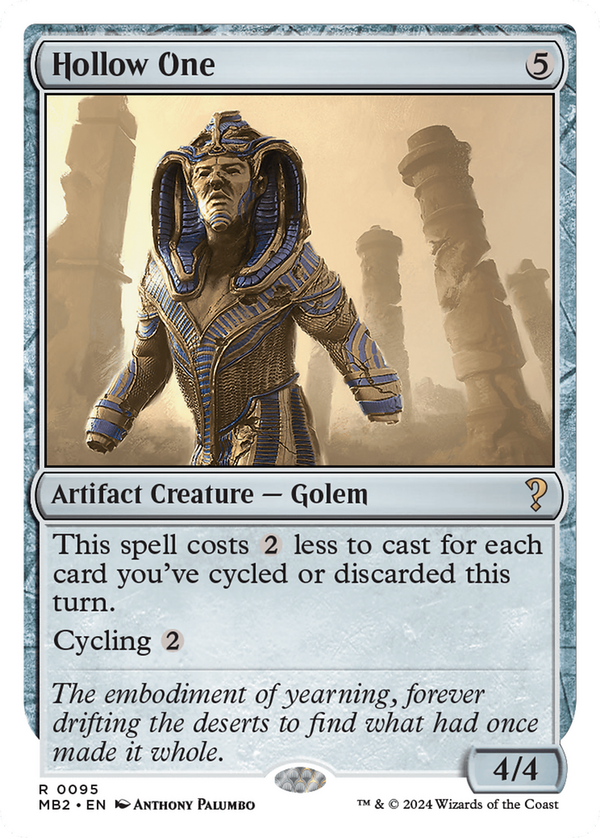
Rules text
 less to cast for each card you've cycled or discarded this turn.
Cycling (, Discard this card: Draw a card.)
less to cast for each card you've cycled or discarded this turn.
Cycling (, Discard this card: Draw a card.)