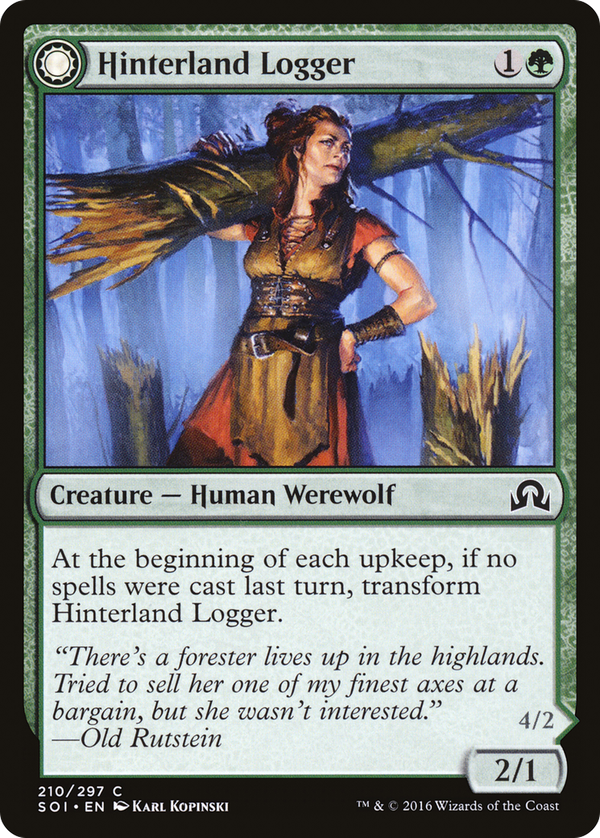
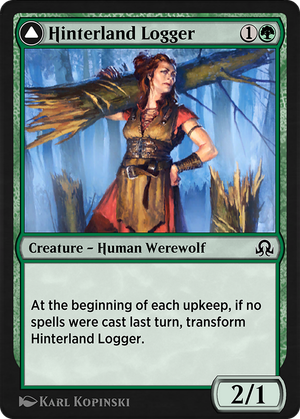
Hinterland Logger // Timber Shredder
Werewolves built their flip condition around the rhythm of a turn, and the front face here is the cleanest read of that mechanic at the bottom of the curve. A 2/1 for two is fragile by design: it asks you to let a turn lapse with no spells cast on either side, which is exactly when an aggressive deck least wants to do nothing. The reward for holding back is a 4/2 trampler, a body that hits noticeably harder and tramples through chumps while staying easy to remove. The asymmetry of the flip conditions is what makes the line so volatile. Going wolf takes a quiet turn from everyone; going back human takes a single player casting two or more spells, a much easier trigger to hit on purpose. That gap turns the card into a tug of war over the casting count, where a savvy opponent can revert your board state by overextending their own turn, and where playing a second cantrip becomes a defensive maneuver. The design lives entirely in that tension between tempo and patience: the spell-casting clock that powers the whole tribe is at its most legible on a two-drop, where the cost of triggering the flip (an idle turn) and the cost of undoing it (a flurry of cheap spells) sit close enough together that both players are constantly doing math the card itself never spells out.