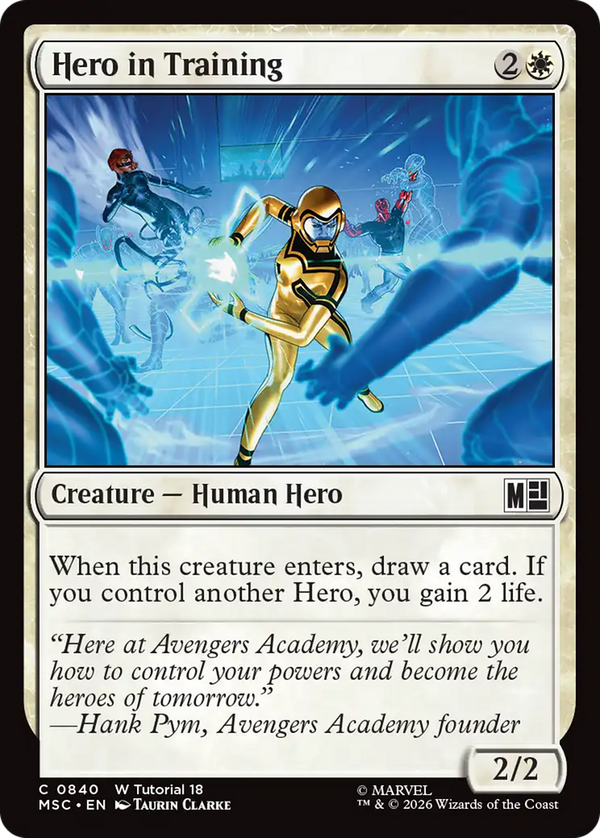
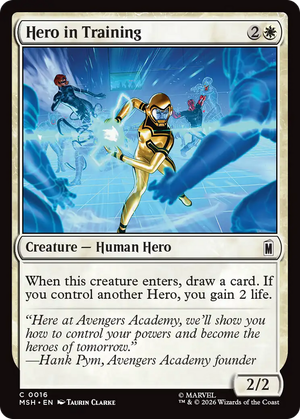
Hero in Training


The cantrip body is the whole point: three mana buys you a 2/2 that draws a card on the way in, so the creature nearly pays its own way before it does anything else. That baseline (a small white body that replaces itself) is old and well-understood, from Elvish Visionary onward, and it exists precisely so a deck can run a creature it wants for tribal reasons without eating a card of tempo to do it. The Hero-count clause says everything about who this card was built for: the two life is small, conditional, and irrelevant in a vacuum, which means it is not there to be good on its own. It rewards a board already committed to Heroes, handing a routine curve-filler a payoff that scales with a plan you were running anyway. The restraint is in how little the rider asks and how little it gives: no counter, no doubled draw, nothing that would tip the card into build-around territory. It stays a cheap replacement body that happens to check whether the deck is doing the tribal thing, and offers a nudge if it is. That is the correct read on a supporting-cast creature: replace itself, stay cheap, and let the tribe carry the weight.