Heliod, God of the Sun


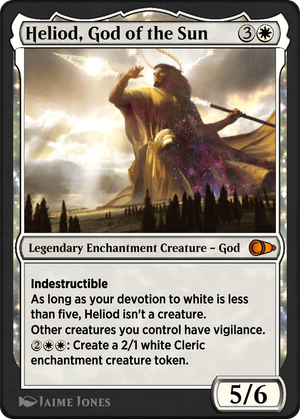
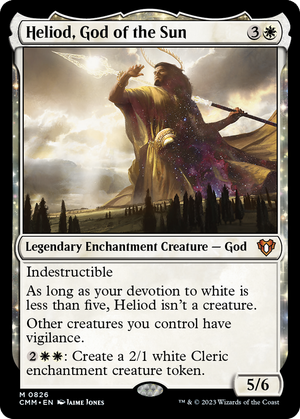
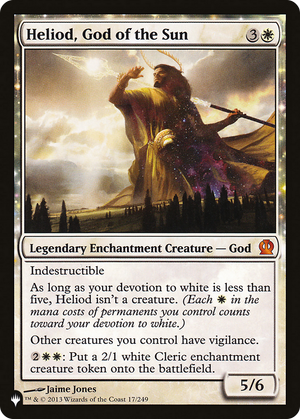
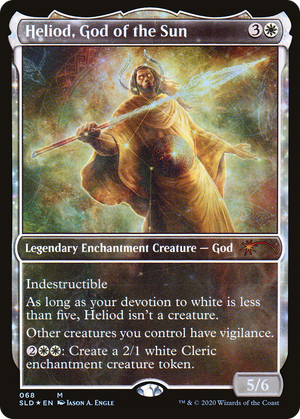
The conditional creature clause is the whole design conceit of the God cycle, and this is the version where the tension between body and permanence sits most comfortably. A 5/6 that only counts as a creature once white devotion reaches five is, functionally, a threat you can never quite be punished for committing: it stays on the board as an enchantment through a wrath, and its indestructibility means damage-based sweepers and combat leave it standing. That indestructibility is narrow, though, and worth being precise about. It answers removal that assigns damage or triggers destruction, the exact profile a go-wide deck fears most, and that includes ordinary enchantment removal: a Disenchant or a Naturalize reads "destroy," so Heliod shrugs it off the same way it shrugs off a Wrath of God. What actually takes it cleanly is exile, bounce, or sacrifice, none of which care about the keyword. The token activation is the quiet brilliance here, and not because the Clerics feed devotion (they have no mana cost, so they contribute nothing to the count). Their value is twofold: they convert excess mana into bodies whether or not the God is currently a creature, and they widen a board that the vigilance grant then lets attack without leaving itself undefended. The failure state is soft by design. When devotion drops, you have not lost a card; you still own an indestructible permanent printing two-power Clerics on demand: a closer, a mana sink, and an anchor for a white go-wide plan folded into one.
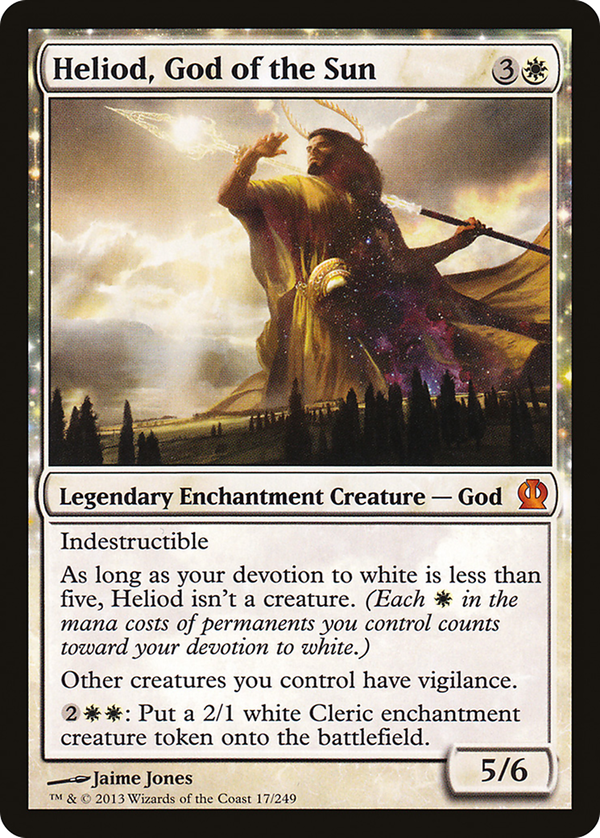
Rules text
in the mana costs of permanents you control counts toward your devotion to white.)
Other creatures you control have vigilance.
 : Create a 2/1 white Cleric enchantment creature token.