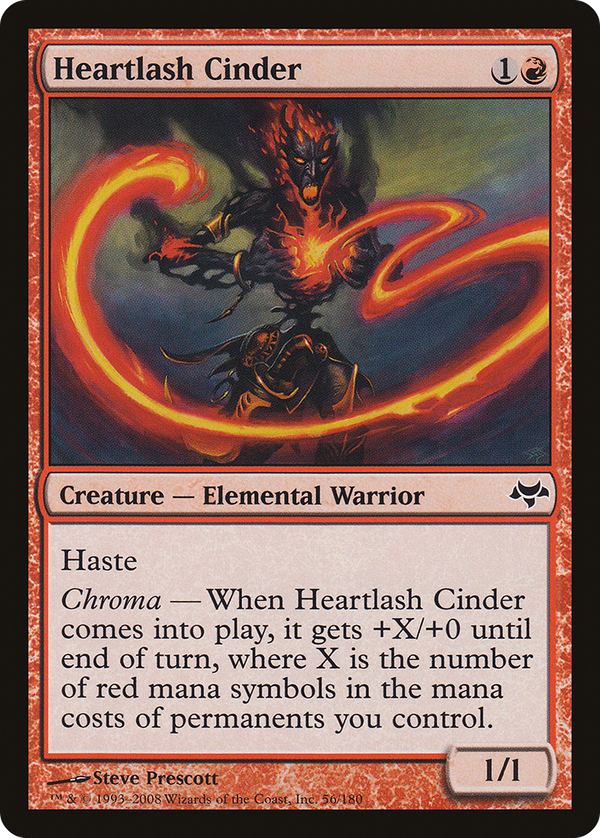
Heartlash Cinder


The math runs backward from how aggressive red usually scales. Most cheap attackers reward you for emptying your hand; this one reads the board you have already built, counting the red pips printed on the costs of permanents you control and converting them into power for a single hasty swing. A lone red two-drop beside it does almost nothing. A table full of double-pipped red costs turns the 1/1 into a real clock the moment it lands. That dependence creates the tension it lives inside: the more developed your red board, the bigger the burst, but a developed red board also means the game has gone long enough that a one-toughness elemental dies to a stiff breeze. The reward is front-loaded and gone at end of turn, so it functions less as a creature you keep and more as a packet of reach that arrives with haste, demands one attack, and then shrinks back to a body the rest of the board outclasses. It is a clean demonstration of what chroma was after as a mechanic: a payoff that measures the texture of your mana costs (how many red symbols, where) rather than their total, rewarding a board whose colored commitment is already visible rather than the spells still waiting in hand.