Hearth Kami


The X in the activation cost is what separates this from a body that simply trades up: the artifact you destroy can be any mana value, but you pay for that reach at the moment you pull the trigger, and the 2/1 is gone either way. That structure is the tell. This is a sacrifice-fueled artifact answer that scales with the threat instead of capping at a fixed point, so it stays relevant against a costly engine in a way a flat-rate naturalize-style effect does not. The cost is the constraint that pays for the flexibility: against a cheap artifact you spend almost nothing, against an expensive one you commit real mana, and in both cases you surrender a creature that was perfectly happy attacking. Stapling a built-in answer to a workable beater was an early-era attempt to bridge proactive and reactive cards, letting an aggressive deck hold up disruption without diluting its curve. The wrinkle worth noting is timing: the activated ability carries no speed restriction, so it can blow up an artifact at instant speed, turning the card from a topdeck answer into a threat-or-removal split you hold open. The body invites the swing; the sacrifice ability rewards waiting. That tension, between attacking now and saving the creature for the right artifact, is the decision baked into every turn you keep it on the table.
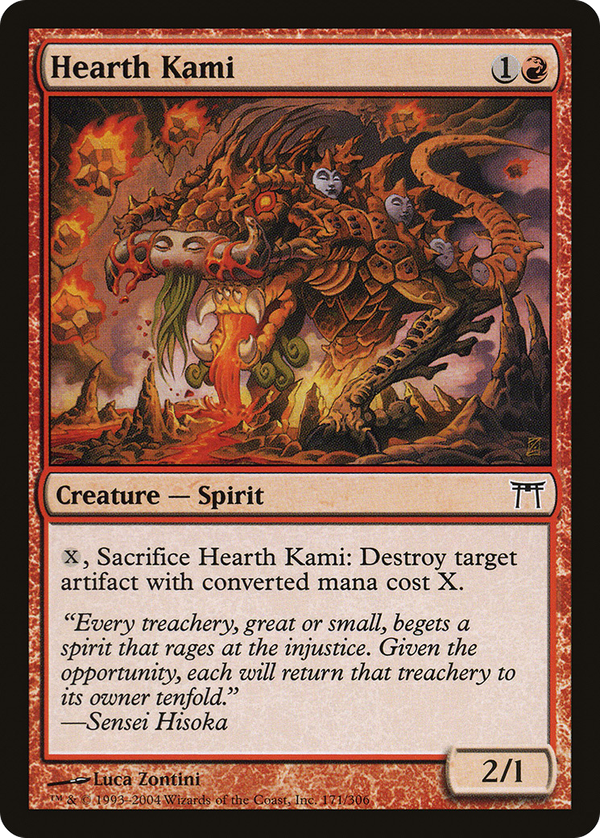
Rules text
 , Sacrifice this creature: Destroy target artifact with mana value X.