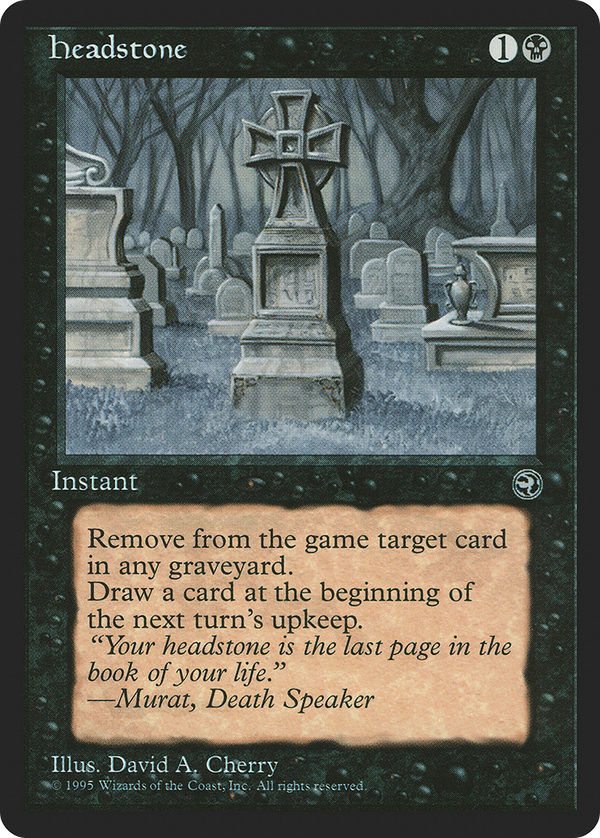
Headstone


Single-target graveyard hate stapled to a delayed cantrip, and the design tension between those halves is what makes the card worth reading. Black has always paid a premium for card advantage, and the cost it pays here is timing: you exile one card now, but the replacement does not arrive until the next upkeep. That deferral is the whole point. It keeps the spell from being a clean two-mana cantrip with a free relevant clause attached, because the body of the card is graveyard removal first and the draw is the consolation prize, paid out a full turn late rather than on the spot. The instant speed is doing the heavy lifting: it lets you exile a recursion target before an opponent can reuse it, then collect your card once the dust settles. What dates the design is the one-at-a-time exile, which makes this a scalpel rather than the graveyard-wide sweep later answers prefer; against a stocked yard it removes a single problem, not the engine behind it. As a piece of early-design archaeology it shows Wizards still treating graveyard interaction as a niche black effect priced like a luxury, with the cantrip bolted on to justify the card slot rather than to break it.