Haunt of the Dead Marshes

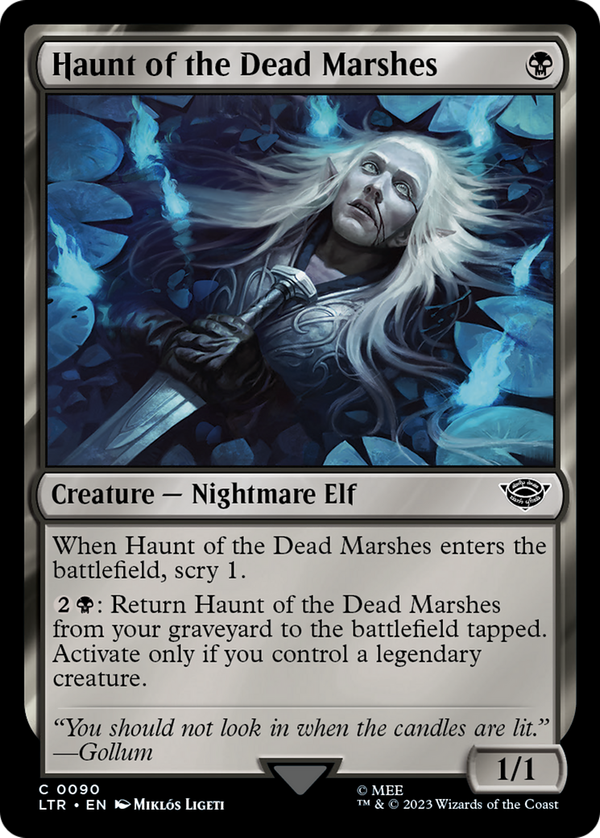
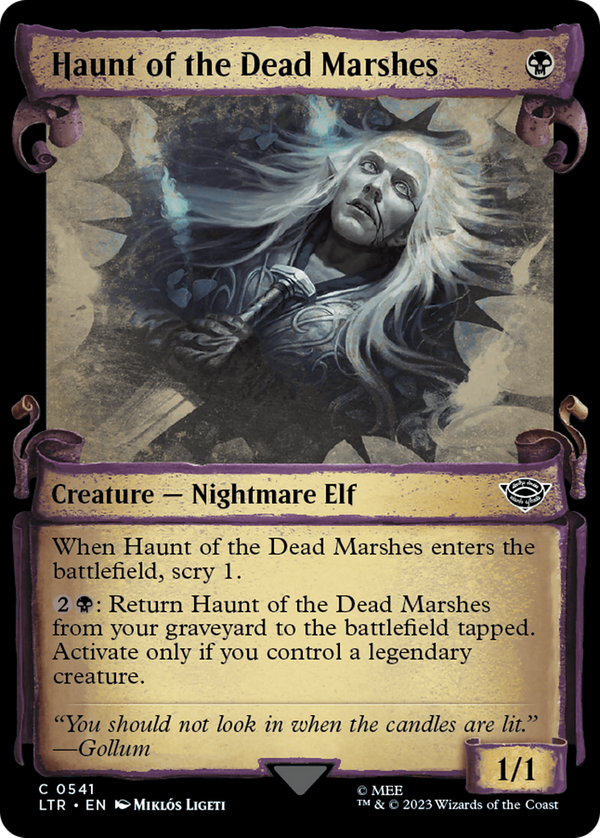
A one-drop that scries when it enters is filler, the sort of black common that pads a curve and asks nothing further of the deck. The recursion clause is where the card earns a second look: for three mana it climbs back out of the graveyard, over and over, and each return comes stapled to another scry, so the loop rebuilds your board while it tidies your draws. The gate is what turns a giveaway into a puzzle. That return fires only while you control a legendary creature, which means black gets recursive fodder but only after it agrees to build around a legend first. The tapped clause is doing precise work: there is no sorcery-speed restriction, so you can activate the return during combat or on an opponent's turn, but the body arrives unable to block, so it never functions as a surprise blocker. Recursion, then, is the whole pitch: a self-refueling well of bodies, a natural feeder for a sacrifice engine or any shell already leaning on a legend to operate, where a 1/1 that keeps coming back and keeps digging outweighs the stat line. The design keeps its ceiling deliberately quiet: without a legend it scries once and dies; with one it becomes an inexhaustible resource that asks only for mana. That conditional switch, dead card or engine depending on a single constraint, is the whole idea the card is built around.
Rules text
 : Return this card from your graveyard to the battlefield tapped. Activate only if you control a legendary creature.