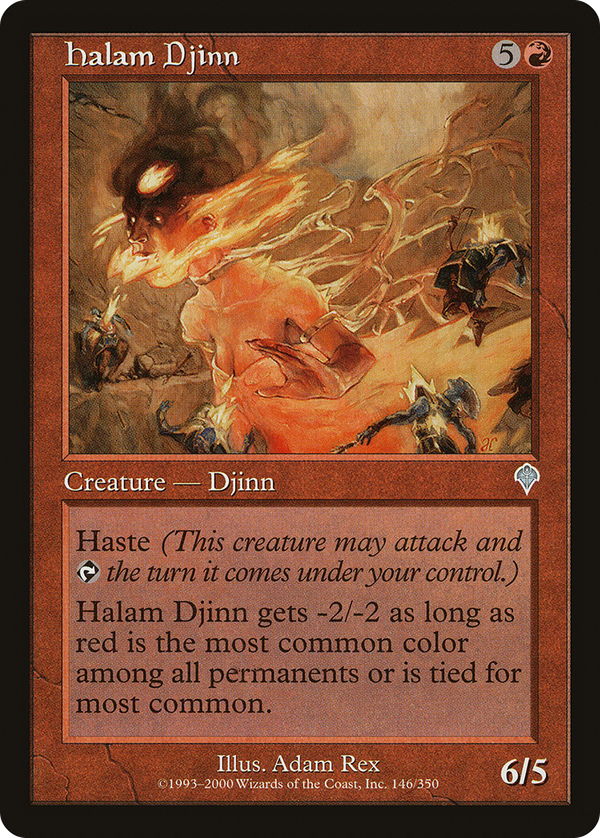
Halam Djinn


Printing a self-hating red creature is a strange instinct, and the cleverness is in how the conditional inverts: most penalty creatures want you to fix your own deck to dodge the drawback, while this one wants you to read the rest of the table. The -2/-2 only bites when red leads (or ties for the lead) among all the permanents on the battlefield, your opponents' boards included. In a red-saturated field it shrinks to a fragile 4/3 with haste; in a multicolor pile where red sits in the minority, it crashes in as a full 6/5 the turn it lands. That is a literal expression of a design thesis from the era it comes from, a moment when sets were built to reward splashing and punish monocolor commitment: a red card that performs best precisely when red is not dominant. The body is generous for the cost, and the conditional is the counterweight that pays for it. Load up on red and the 6/5 collapses into something far more answerable, which keeps the rate from being free in the exact decks most likely to run it. The board state, rather than your hand, becomes the thing you have to read before you commit to an attack.