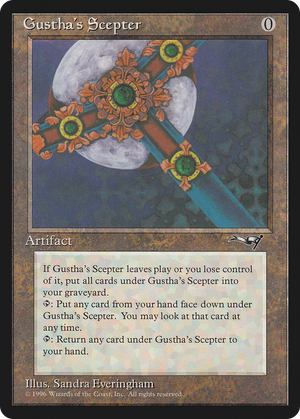
Gustha's Scepter

A storage box with a self-destruct clause. The design idea is hand-as-vault: you stash cards face down where discard and hand-size effects cannot touch them, peek at them whenever you like, and pull them back when you need them. The friction that keeps this from being a free safety-deposit box is the loss clause: the moment you stop controlling the artifact, every card squirreled inside goes straight to the graveyard. That single line is what turns a quiet utility piece into a liability, because it does not distinguish how you lose it. Theft trips the clause, but so does destruction, since either way the Scepter leaves your control and the vault empties to the graveyard. The opponent is rewarded for touching the artifact at all, by any means. In the era it came from, before exile was even called exile, this kind of "removed from the game face down" zone was rare and a little dangerous to read, which is part of why the card has aged into a puzzle-box for players who like building around obscure interactions. The zero cost matters too: it slips into any deck regardless of color, asking only for the tap and the willingness to manage a second, fragile hand. It is a card about hiding information and storing value against a clock you do not fully control, and the tension between hoarding and protecting is the whole game it asks you to play.
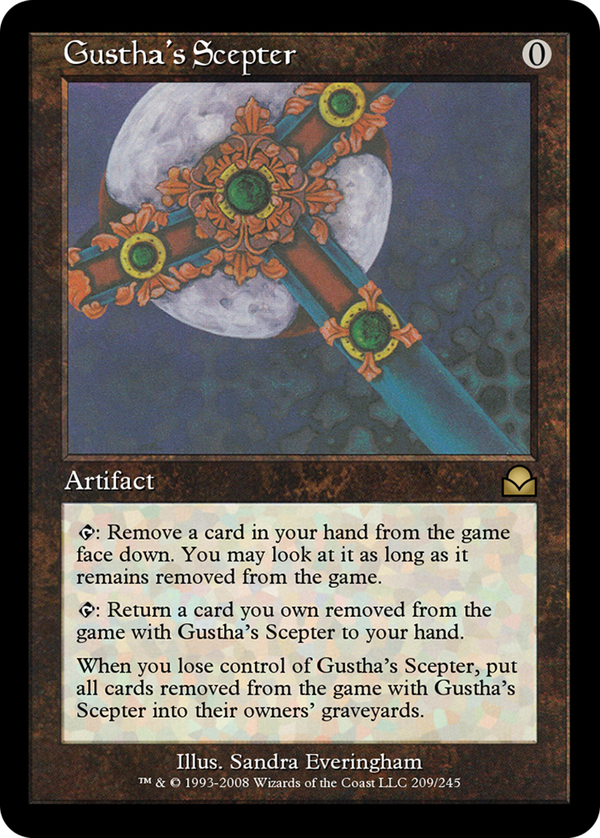
Rules text
 : Exile a card from your hand face down. You may look at it for as long as it remains exiled.
: Return a card you own exiled with this artifact to your hand.
When you lose control of this artifact, put all cards exiled with this artifact into their owner's graveyard.
: Exile a card from your hand face down. You may look at it for as long as it remains exiled.
: Return a card you own exiled with this artifact to your hand.
When you lose control of this artifact, put all cards exiled with this artifact into their owner's graveyard.