Guild Feud


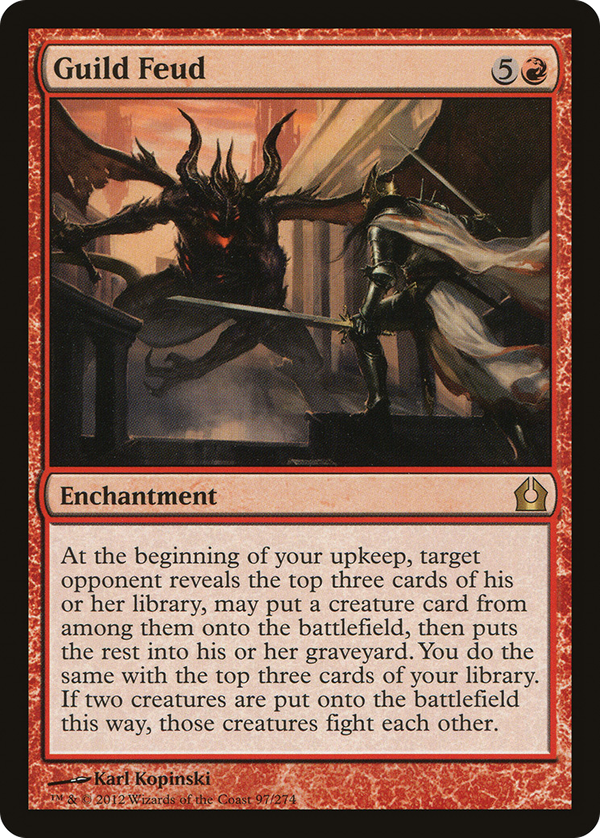
The fight clause is where the design swerves into chaos. Most upkeep enchantments that dig into the top of a library hand you a tidy, predictable engine; this one hands the steering wheel to your opponent first, lets them sift for a creature, then asks your own deck to roll the dice on whether it can answer. The sequencing is the whole gambit: your opponent reveals and chooses before you do, so they install the body most likely to win combat, or, reading the board, decline to put anything down at all. That declination is not the disaster it looks like. If only your creature enters, nothing fights, and you simply keep a free body off the top of your library. The fight only happens when both sides land a creature, and that is where the symmetry breaks: whatever survives is the one thing you actually got out of the deal. When a creature does enter, only the other two cards of that three-card dig hit the graveyard while the chosen body sidesteps the bin, so even the misses chip a library down and feed a graveyard plan. What it wants is a deck stuffed with enormous, single-minded fatties that win any fight they enter, since the trade tilts your way only when your floor outclasses their ceiling. Loaded with that, it is a recurring free creature with removal stapled on; loaded with anything less, it is a coin flip that hands your opponent bodies. The variance is not a flaw to tune around so much as the entire texture of the card, a deliberately swingy red enchantment from an era still willing to help the table as much as the caster.