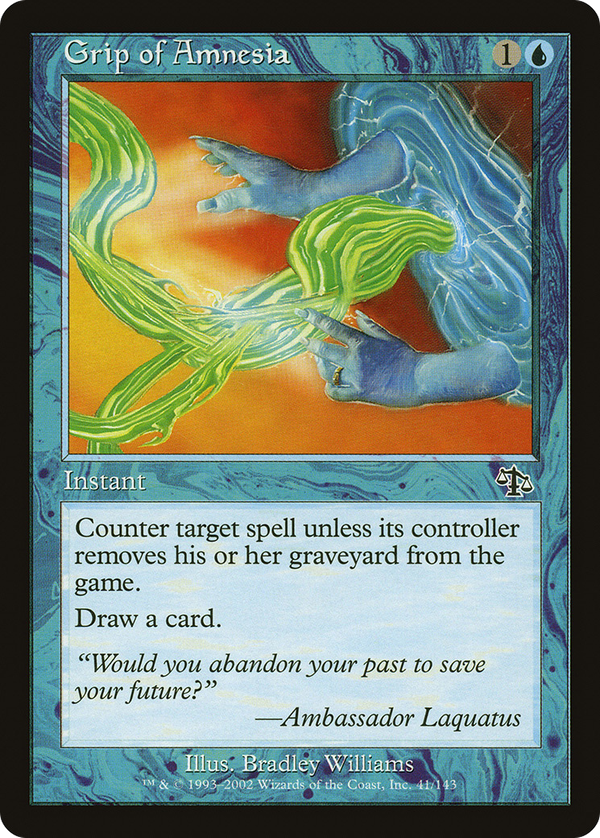
Grip of Amnesia


Most counterspells ask the caster for mana they may not have; this one asks for something they may want even more. The choice it forces is a graveyard tax: counter the spell outright, or let it resolve at the cost of exiling every card the opponent has buried. Against a deck built on threshold, flashback, dredge, or reanimation, that is not a discount, it is a demolition; against a deck that does not care about its graveyard, the counter half rarely fires and you are left with a softer effect. The cantrip is the structural piece doing quiet work: even when the opponent happily dumps their graveyard and their spell resolves, you have not spent a card, only a beat of tempo, and you draw forward to the answer you actually wanted. That makes it a hate effect disguised as permission, sharpest precisely against the strategies that lean hardest on what they have already discarded or milled. The design tension is one of audience: a generically efficient hard counter would always be better, but this is deliberately not generic. It punishes a specific axis of play, and against that axis the punishment is brutal. Everywhere else it lapses into its weakest mode, a two-mana spell that counters nothing and merely replaces itself. The cantrip carries the whole gamble: even the specialist's failure case costs you no cards, so the narrowness never turns into dead weight.