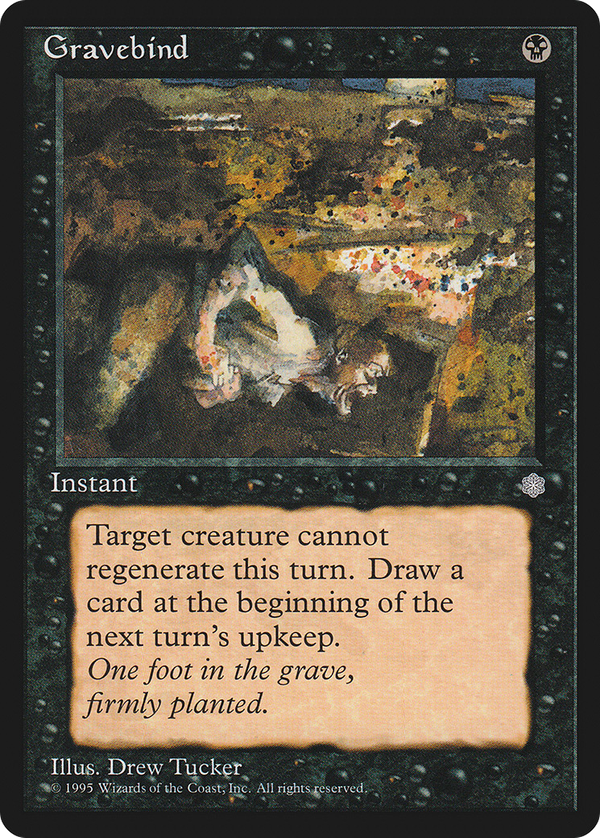
Gravebind

Anti-regeneration was load-bearing answer technology in an era when regeneration genuinely mattered, and most spells that turned it off bolted that function onto something else: a removal spell that also stopped a shield, or an ability riding on a body. Stripping the effect down to a single black mana and nothing else is the odd move here. The spell buys you exactly one thing, a closed regeneration window, and bundles a delayed cantrip as the design's apology for that narrowness. The timing of that replacement draw is the wrinkle worth reading carefully: it triggers on the upkeep of whoever takes the next turn, not specifically yours. Fire Gravebind during your turn and the card lands on the opponent's upkeep, on the opponent's turn; hold it until the opponent has the turn and the draw arrives on yours instead. So you are not buying card parity on resolution: you are buying deferred parity whose timing hinges on when you fire. Because it cantrips, though, the worst case is rarely as bad as it looks: a mistimed or irrelevant Gravebind still replaces itself, leaving you down the mana and the tempo rather than the card. It earns that mana back only when you have already lined up the lethal block or the burn spell that a regeneration shield would otherwise blank. And it answers a problem the game stopped printing: regeneration as a default keyword on midrange creatures has been quietly retired from contemporary design, leaving this a precise instrument for a threat that no longer shows up.