Grafdigger's Cage

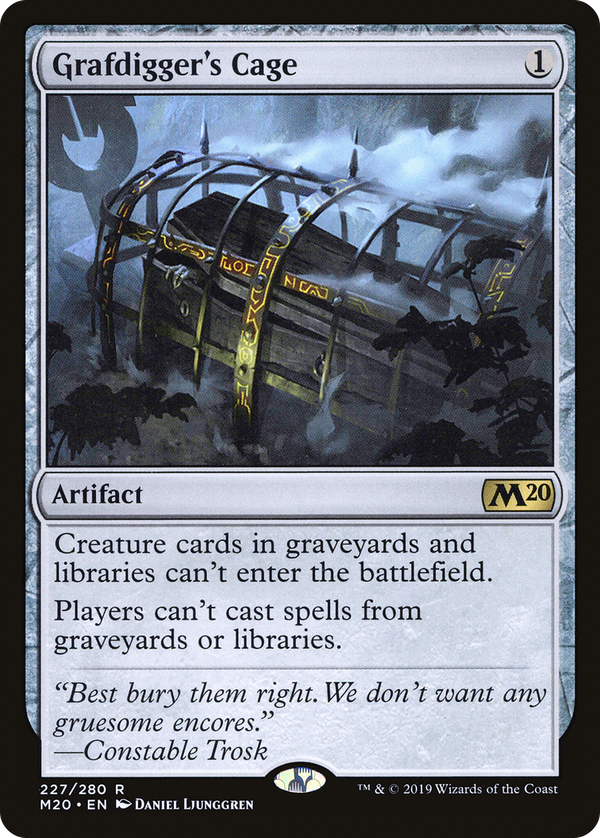
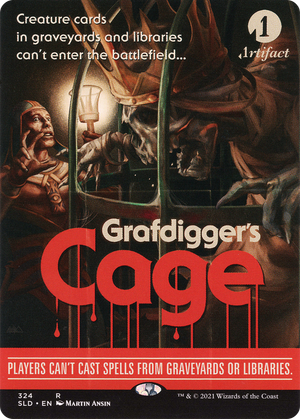
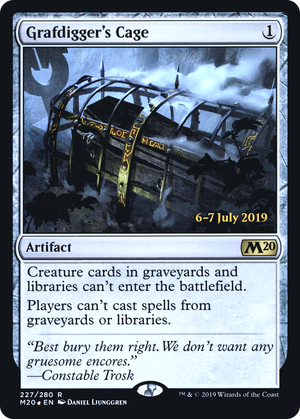
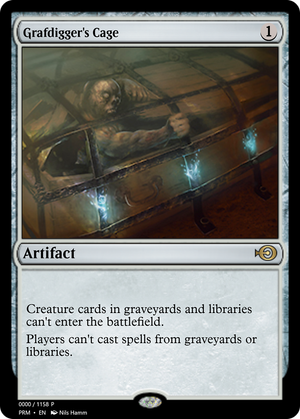
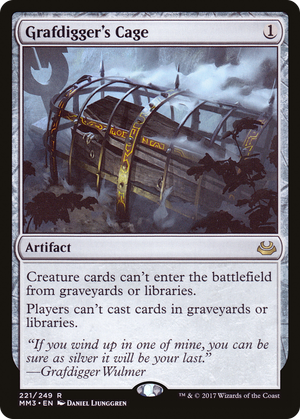
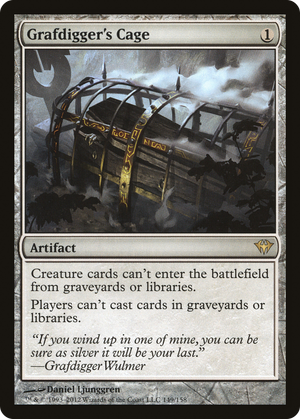
Most graveyard hate answers the symptom: a single reanimation spell, a flashback target, a delve payoff. This shuts off two entire methods of cheating cards into play at once, and it does so without touching the graveyard at all. Nothing gets exiled, no permanent leaves, no trigger goes on the stack. The graveyard and library simply stop being places you can launch creatures or spells from while it sits on the battlefield. That static, non-interactive shape is why it survives in formats that have learned to play around the more aggressive hosers. It dodges the usual outs: a reanimator deck can't sacrifice the creature it just brought back because the creature never arrives; a Snapcaster Mage line goes dead because the spell can't be cast in the first place. The precision is also its limit, and that limit is the design's honesty. It says nothing about milling, about discard recursion that returns cards to hand, about creatures already on the battlefield, or about Eternalize and Embalm tokens that copy rather than move the card. The play is to know exactly which engines it turns off and which it leaves running. It reads as a narrow piece of sideboard plumbing, but the two clauses are doing the structural work of a dozen narrower cards, which is why it keeps reappearing whenever graveyard strategies and library-cheating tutors get too good for the room to police one card at a time.