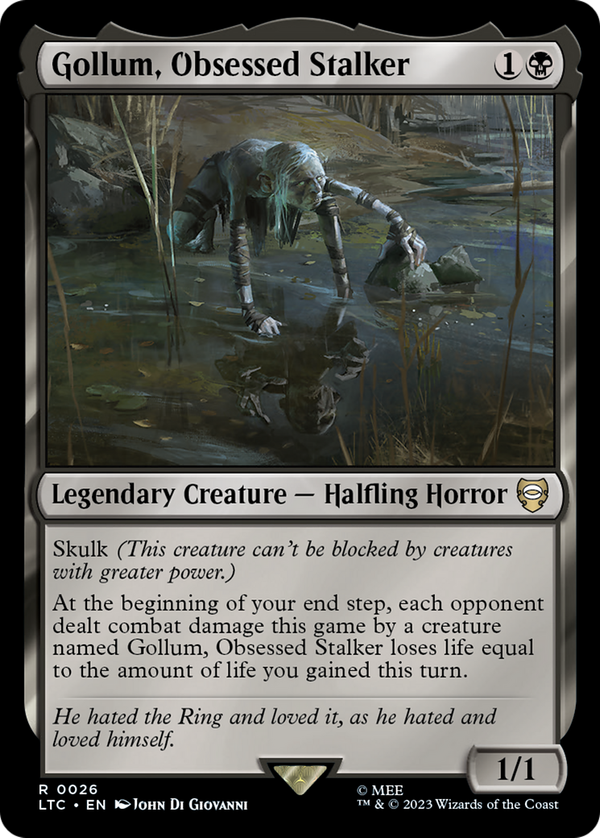
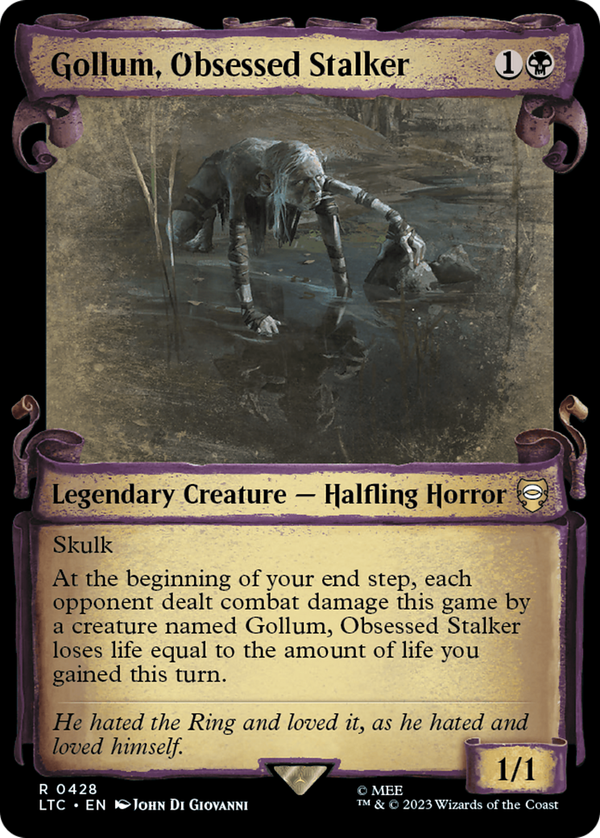
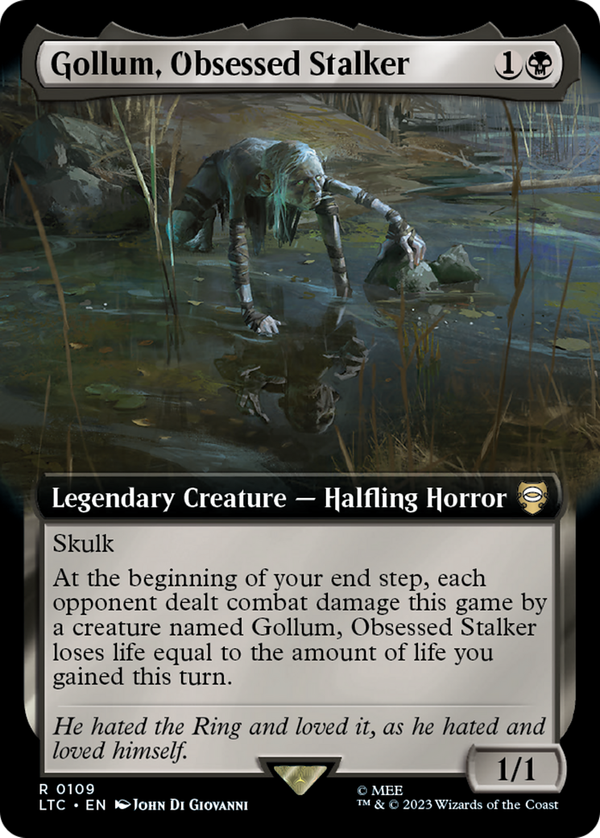
Gollum, Obsessed Stalker


The lifegain-to-life-loss pivot is old ground in black, but the plumbing here is unusual: the damage clause does the arming, and skulk is what guarantees the switch ever gets flipped. Most lifegain payoffs (the drain-per-turn engines, the aristocrat triggers) don't care how you connected in combat. This one demands a specific historical fact: has a creature by this name ever landed combat damage on that opponent? Once it has, the end-step trigger converts every point of life you gain into life that opponent loses, retroactively armed against them for the rest of the game. That is why skulk carries more weight here than a 1/1's evasion usually would. On a one-power body, "can't be blocked by creatures with greater power" locks out almost the entire battlefield, so the first swing that arms the switch is close to guaranteed. Connect once, and the payoff becomes a standing threat aimed at that opponent: the creature no longer needs to attack, no longer needs to survive combat, no longer needs to be on the board at all for the counting, only for the end-step trigger to fire. The design pairs a fragile stalker with a delayed, cumulative payoff and asks you to spend the early turns securing a single hit rather than developing a board. It is a lifegain payoff dressed as a creature, where the creature's only real job is to have already done its job.