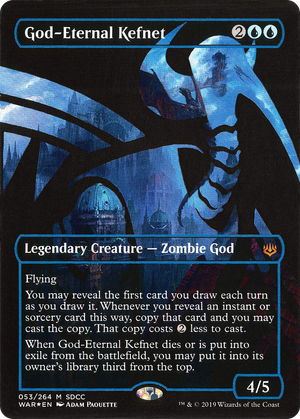
God-Eternal Kefnet


The reveal clause is the whole puzzle. Each of the Eternal gods shares the same refusal to stay dead (sliding third from the top of the library, so removal buys tempo but never a clean answer), and each pairs that persistence with an engine, but this is the only one keyed to your draws rather than to entering the battlefield or casting a spell. The window is narrow but wider than it looks: it tracks the first card you draw each turn, independent of the opponent, so a cantrip cast during their turn opens a second bite at the trigger. Hit an instant or sorcery and you copy it and cast the copy for two less. That single constraint reshapes the deck around it. You do not want a heap of cheap spells so much as a library arranged so your best card sits where the reveal lands, and the recursion clause quietly guarantees you keep drawing your way back into that arrangement: die, resurface a turn or two later, resume the loop. The payoff is an attrition threat rather than a haymaker. A 4/5 flier is already a durable body and a real clock, and the discounted extra cast every turn it survives compounds; the near-impossibility of clearing it for good is what turns a strong value engine into a genuine problem, forcing an opponent to answer it three or four separate times to be rid of it. The copy engine rewards a deck built to sculpt its draws; the recursion makes sure those draws keep coming.
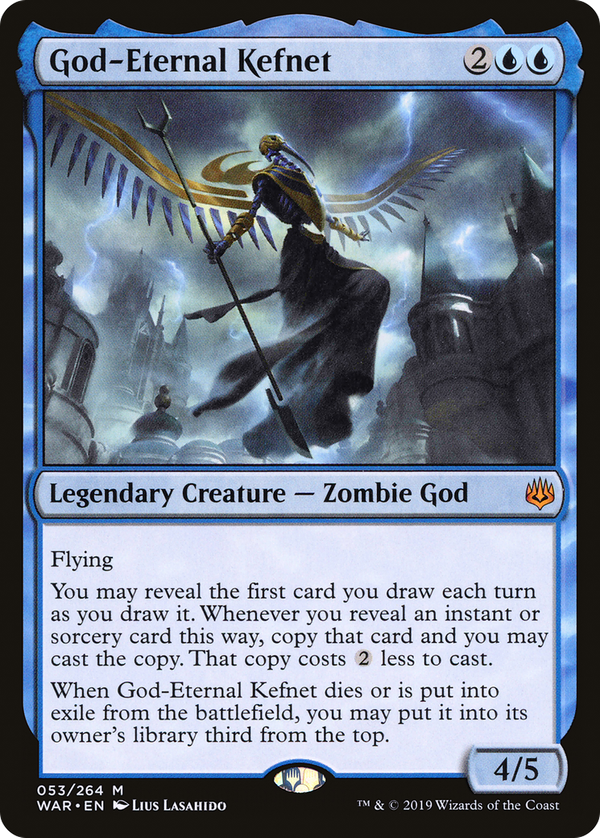
Rules text
less to cast.
When God-Eternal Kefnet dies or is put into exile from the battlefield, you may put it into its owner's library third from the top.