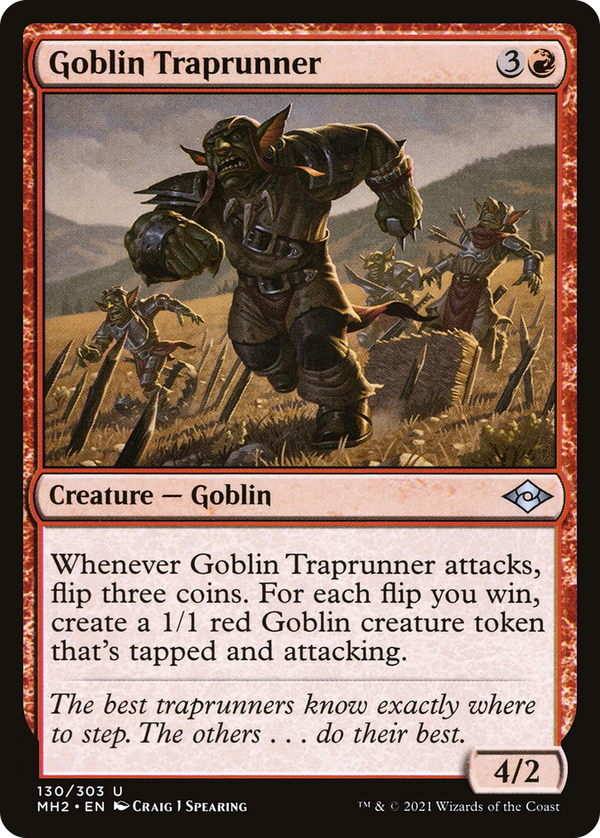
Goblin Traprunner


The variance is the point, and it is engineered to fail forward. Three coin flips per attack put the expected return at a token and a half, but the distribution is what makes this a build-around: the floor is zero, the ceiling is three, and both extremes land the tokens already tapped and attacking, sidestepping the summoning-sickness tax that usually gates go-wide payoffs. That last clause is the whole design lever. Every token skips the turn cycle it would normally spend waiting to attack, so the trigger doesn't just make bodies, it makes damage the same combat step it resolves. A 4/2 for four mana with no evasion is an unremarkable rate on its own; the real function is downstream, feeding a Goblin count for a lord, renewing sacrifice fodder each turn, or scaling under an anthem. Coin-flip Magic has a long lineage of cards that ask you to gamble for value, and most of them punish the low roll with a dead card. This one hedges: even a bad flip still attacks with a 4/2, and a good one triples your board mid-combat. The design trusts variance because it staples the payoff to an attack that was going to happen anyway, turning the coins into upside rather than a coin-flip on whether the card does anything at all.