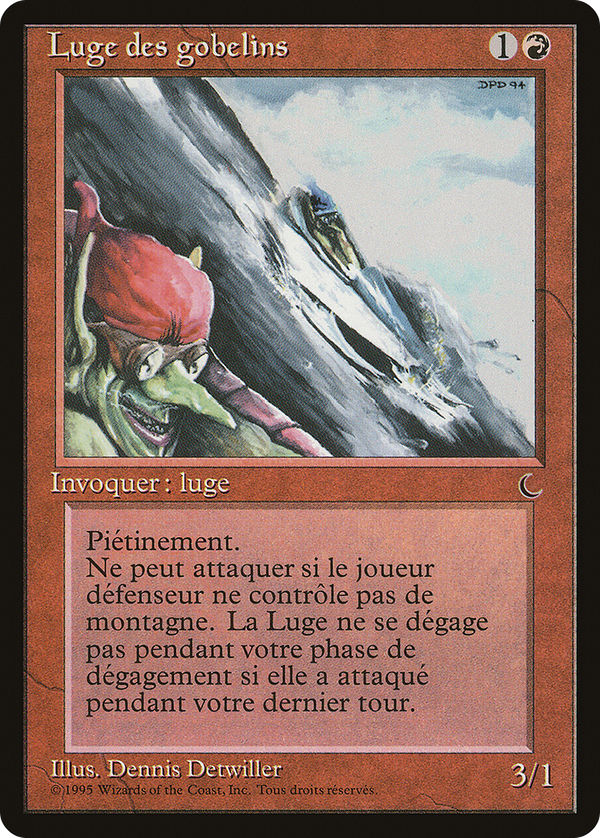
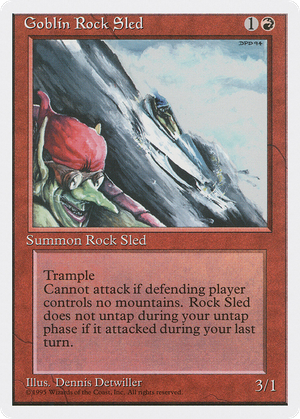
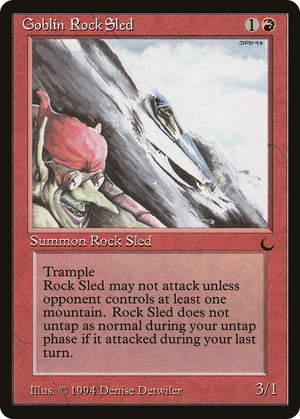
Goblin Rock Sled


The name is the whole design brief: a sled needs a slope, so this three-power trampler can only charge when the defending player controls a Mountain, and it cannot reset between runs (it does not untap if it attacked last turn). Both clauses are flavor wearing the costume of game text, and both gut the card. The first hands your opponent total control over whether the creature ever connects: against any deck without Mountains, you have spent two mana on a body that legally cannot attack. The second means even in the matchup where it can swing, it does so every other turn at best, tapped and vulnerable in between. This is downside-as-theme design, the impulse that produced a run of period cards where the simulation or the joke came first and the play pattern came nowhere. What the sled documents is a design philosophy Wizards spent the following decade unlearning: that conditional drawbacks should sharpen a card's role, not erase it. A drawback that depends entirely on the opponent's deck is not a cost the pilot can build around; it is a coin flip decided before the first turn. The trample is almost cruel in context, a reminder of the damage this thing is theoretically built to do, attached to a creature whose two restrictions make sure it rarely gets the chance. It is a fossil of that lesson being learned the expensive way.