Goblin Razerunners


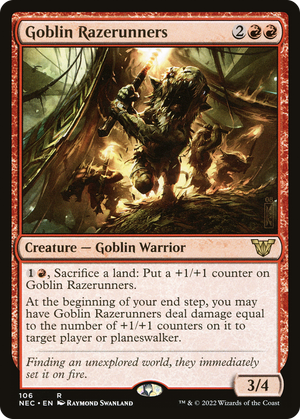
The land-sacrifice clock is the design idea here, and it runs on a resource almost no other engine wants to spend. Each land fed to the activated ability does double duty: it grows the body and, more to the point, raises the floor on the end-step damage that follows. Because the counters drive both, the two halves compound. Stack three counters and you have a 6/7 that also reaches across the board for three at the beginning of your end step, damage that arrives whether or not the creature ever swings. The cost is what disciplines it. You are dismantling your own land count to power the engine, so it accelerates only once extra lands have become dead cards and stalls badly while you still need every source for spells. That backloading makes it a late-game reach finisher rather than a board presence: the end-step trigger goes straight at a player, climbing automatically once the counters are in place and ignoring blockers entirely. Pointing it at a planeswalker extends the same line of attack to the loyalty-based threats that were rising to prominence around the time this kind of design appeared, letting a grindy red deck chip down a walker without committing creatures to combat. It is a slow engine that asks for a flooded manabase and pays off by converting that flood into inevitability.
Rules text
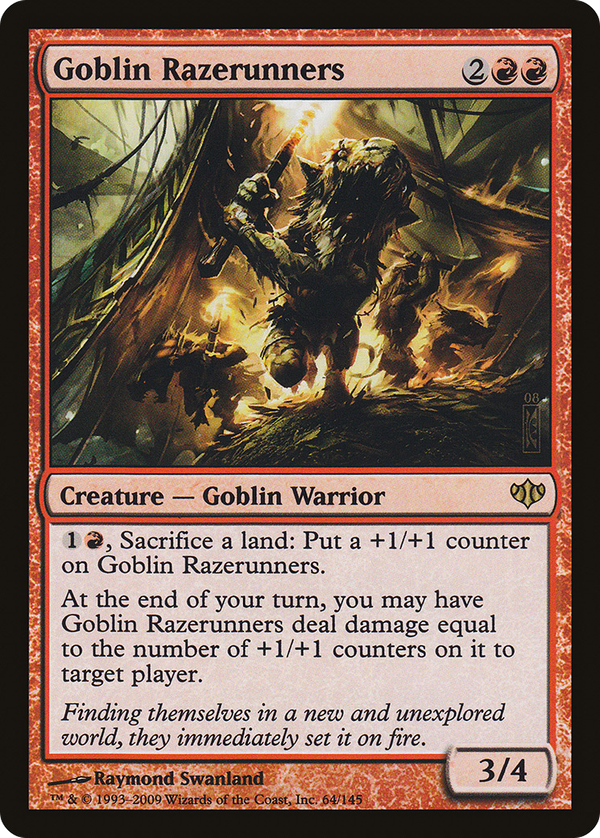
 , Sacrifice a land: Put a +1/+1 counter on this creature.
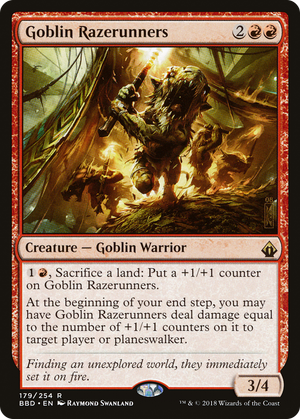
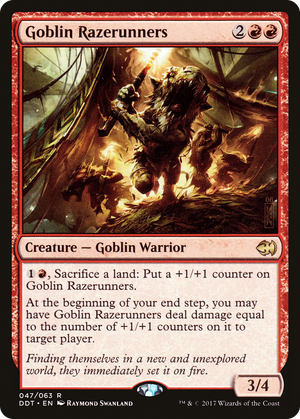
At the beginning of your end step, you may have this creature deal damage equal to the number of +1/+1 counters on it to target player or planeswalker.
, Sacrifice a land: Put a +1/+1 counter on this creature.
At the beginning of your end step, you may have this creature deal damage equal to the number of +1/+1 counters on it to target player or planeswalker.