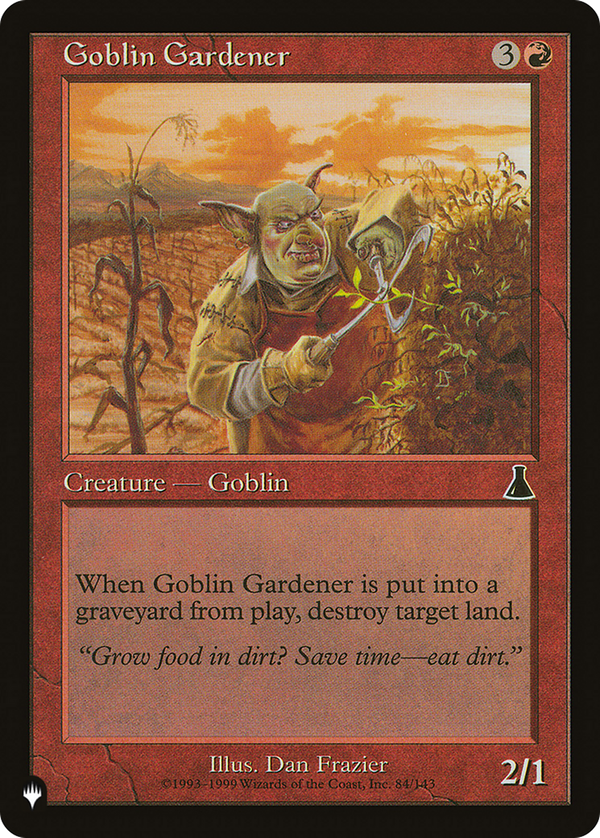
Goblin Gardener


The land destruction is the entire pitch, and it comes free: the body is overcosted on purpose so the death trigger carries its price on the front of the card rather than the back. The design tension is in the timing. The trigger fires when this creature dies, not when it enters or attacks, so killing it is never clean. Block it and the opponent loses a land; chump it into something bigger and you still strip a land in the trade; point removal at it and they have traded a spell for a land of their own. That death-trigger framing was a recurring red and Goblin idiom of the era, the same logic that lets sacrifice-fueled bodies convert into board impact on the way to the graveyard. Here the impact is mana denial, the slowest and most grinding axis red usually gets to touch, smuggled onto a creature that is otherwise unremarkable. The friction in the rate is plain: four mana for a 2/1 is a tax you pay for a land you only destroy once, and only when the goblin dies on someone's terms. This is how older red approached attrition before the color leaned fully into burn to the face: make the opponent pay to interact, and make every answer they aim at your goblin cost them a land in return.