Goblin Flotilla


Islandwalk on a 2/2 is a real clock against a blue deck: two unblockable damage a turn is a clean line. The catch sits in the combat trigger, which inverts the usual logic of a payment. Most combat-relevant mana goes toward gaining an edge; here the red is a tax you pay to deny your opponent one. Skip it and the Flotilla starts handing first strike to whatever it fights, which on a 2/2 body means trading down or dying outright. The tax only bites when the creature commits: the delayed trigger keys off this creature blocking or becoming blocked, so the cost is real precisely in the turns you want it in combat, and absent in the turns you hold it back. That structure (a payment that gates a downside rather than an upside) is the friction the set leaned on across its commons, and it never found a comfortable home: too situational to be a beater, too punishing to swing freely, its evasion contingent on whether an opponent controls an Island. It captures a moment in mid-90s costing philosophy, when Wizards was still treating negative triggers as a balancing lever and had not yet learned how badly a "pay or suffer" clause taxes the card's own controller more than anyone across the table.
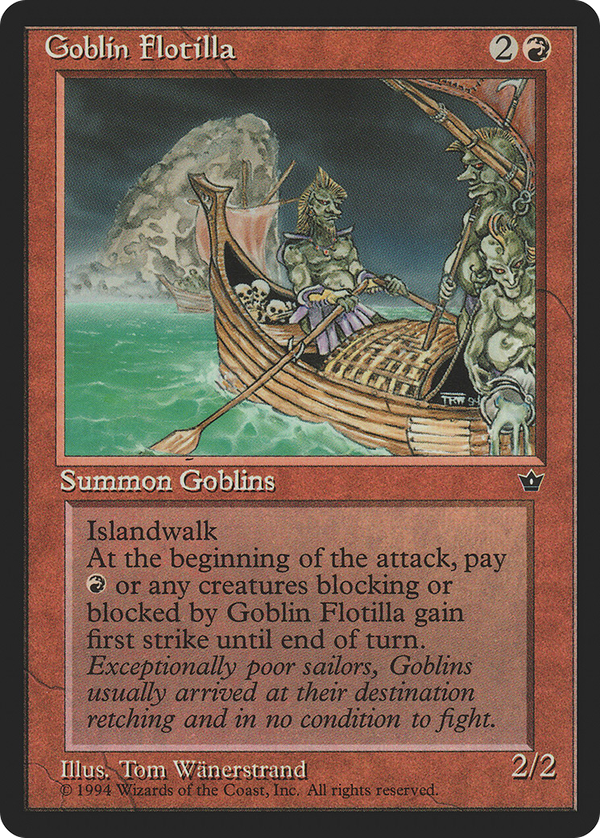
Rules text
, whenever this creature blocks or becomes blocked by a creature this combat, that creature gains first strike until end of turn.