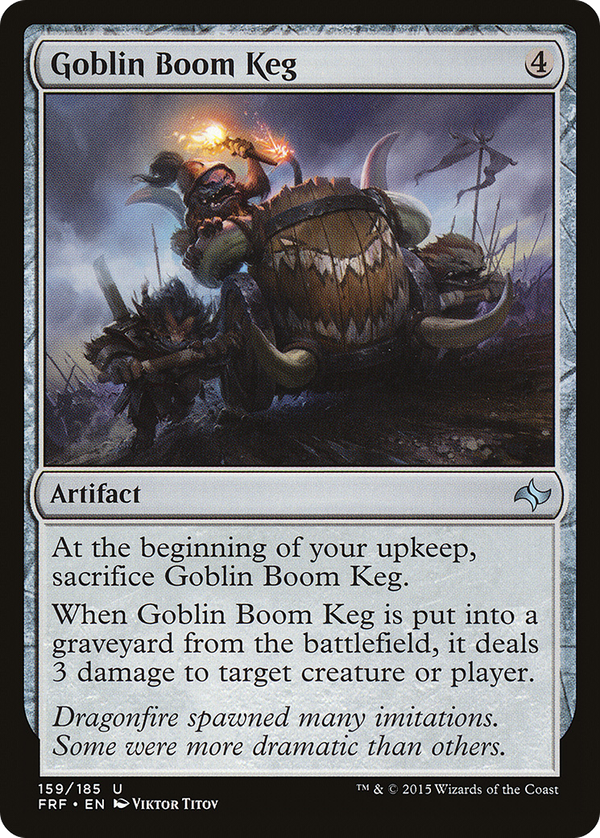
Goblin Boom Keg

The transaction here is delayed and inevitable: drop four mana now, and on your next upkeep the artifact dies on its own and throws three damage wherever you want it. The sacrifice is not optional and not a choice you make in response to a threat; it is a clock built into the card, ticking from the moment it enters. Four mana for three damage is a dismal rate as burn goes, but the cost is not buying a discount: it is the tax for the card being colorless removal that any deck can run. The damage arrives whether or not you are still able to cast a spell, surviving a counterspell-heavy board or a turn where you are tapped out. The death-trigger structure is the wrinkle that turns its apparent fragility into a strength: because the three damage fires when the artifact is put into a graveyard from the battlefield, an opponent who reaches for destruction-based removal does not defuse it, they detonate it early and eat the shot themselves. Denying the payoff means keeping the artifact out of the graveyard entirely, through exile or bounce, or interfering with the trigger once it happens: countering the triggered ability, redirecting or preventing the damage. The same death trigger means your own sacrifice outlets and artifact-recursion effects accelerate the clock rather than wasting it, letting you fire it on your terms instead of waiting for upkeep. It is a landmine telegraphed a full turn in advance, whose only real cost is the patience to let it go off.