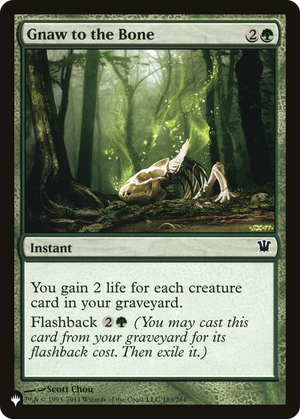
Gnaw to the Bone


Most incidental life-gain spells care about nothing: a flat number stapled to a turn. This one scales off creature cards in your graveyard, which makes it the natural release valve for the self-mill and trade-heavy decks already piling bodies into the yard as a cost of doing business. What turns a one-shot stabilizer into a two-stage one is flashback: cast it from hand at instant speed to swing a race, then buy it back later off the same (or larger) graveyard, since casting it doesn't shrink the count it reads. That second cast matters most against decks built to drain you out over many turns; a deck that can reliably stock six or eight dead creatures gets two large life swings out of a single card, both at instant speed. The flashback is no secret (the card sits face-up in the graveyard for the opponent to see), but knowing it's coming and being able to race through twenty-plus combined life are different problems. The count itself does the balancing work: in a deck that isn't sacrificing, milling, or trading creatures away, it does almost nothing, so it asks you to be the kind of deck that's already losing creatures and wants to be rewarded for it rather than punished. It's a payoff masquerading as a sideboard answer, and it only pays the decks that were going to fill a graveyard regardless.
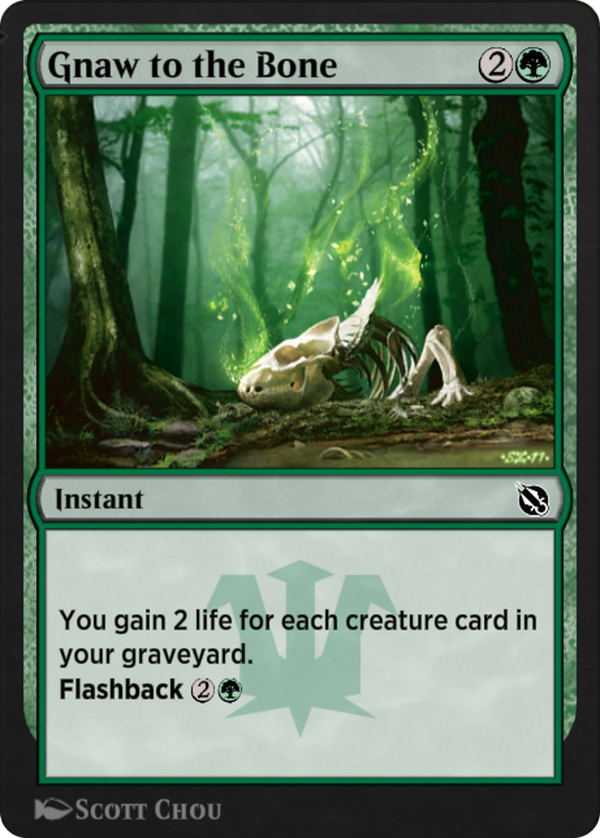
Rules text
(You may cast this card from your graveyard for its flashback cost. Then exile it.)