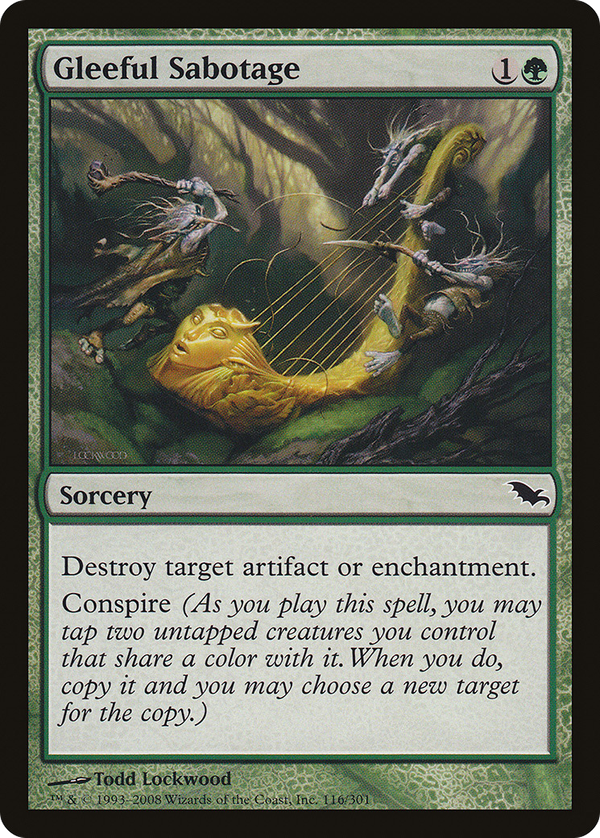
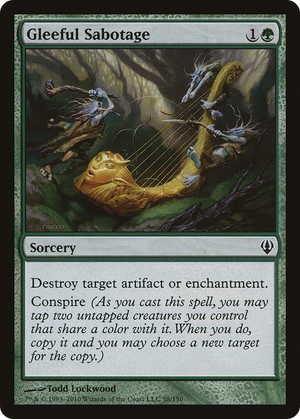
Gleeful Sabotage


Naturalize prices the floor for green artifact-and-enchantment destruction; this trades Naturalize's instant speed for something the sorcery slot can afford to give you. The conspire clause is where the math changes. Tapping two untapped green creatures as an additional cost copies the spell and lets the copy choose a fresh target, so a single card answers two permanents without drawing into a second one. The tax is paid in board presence rather than mana, which is the wrinkle worth dwelling on: a creature-heavy green deck already wants bodies on the table, and conspire asks those bodies to do double duty between blocking, attacking, and bankrolling the cast itself. Both tapped creatures must share a color with the spell, so both have to be green; a lone green attacker propped up by off-color creatures will not pay the tax. The trade-off is real. You are committing two creatures that cannot block or attack the turn you fire it off, which makes the doubled removal a tempo question as much as a value one, and against a board with nothing to destroy you are simply holding a green Disenchant locked behind sorcery timing. As a way to print "destroy two permanents" onto a two-mana card without inflating the base rate, conspire is among the era's tidier answers to that design problem, and this is the permanent-removal spell that shows the mechanic off at its most direct.