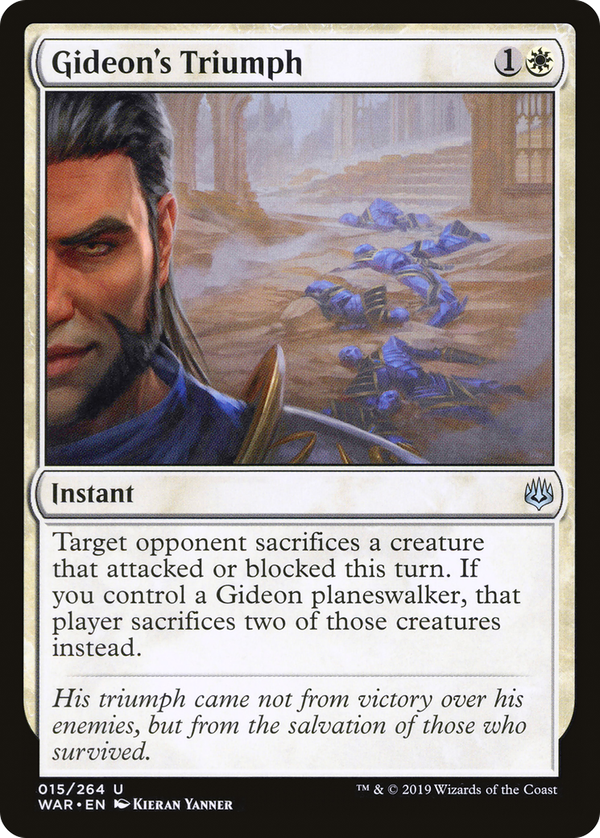
Gideon's Triumph


The design constraint here is elegant: it only bites what the opponent already committed to combat. A creature that stayed home is safe; one that swung or blocked is now a candidate for the chopping block. That timing window makes this a punish card rather than a removal spell in the usual sense, since it does nothing against a passive board and everything against an aggressive one. The Gideon rider doubles the tax when you control the relevant planeswalker, which reads as a nod to the character's flavor (baiting the enemy into a fight they cannot win) but functions as an incentive structure: the base mode is honest on its own, and the card becomes a two-for-one sacrifice edict when the theme comes together. What separates it from ordinary edicts like Diabolic Edict is that the opponent's choice is fenced in by combat history, which cuts down on the usual edict problem of the opponent simply chumping a token. Naming a specific planeswalker in an instant's text was part of a broader experiment in that era with cards that rewarded a particular walker on the battlefield, and this one shows the cleanest version of the trade: the base mode is playable unconditionally, the upside is contingent, and the whole thing keys off decisions the opponent has already made rather than a fixed target you pick.