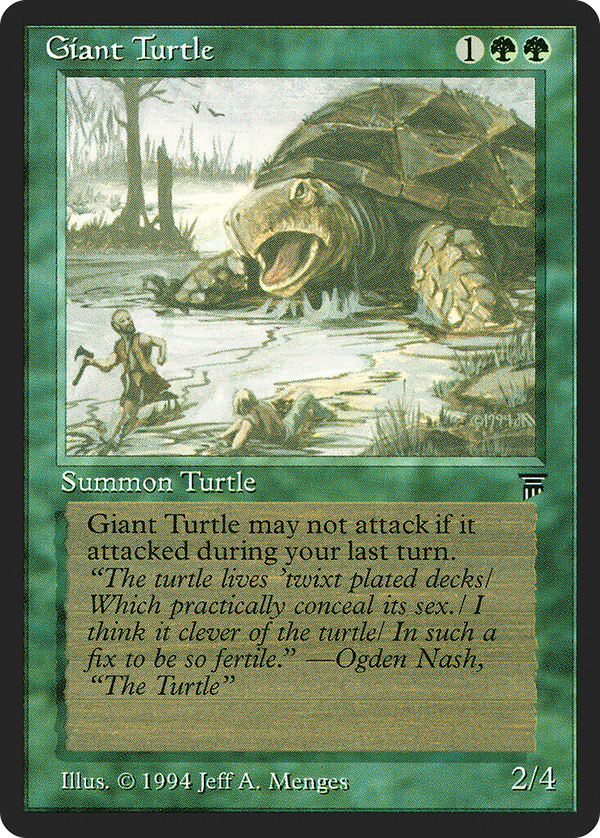
Giant Turtle


Vintage drawback design, preserved in amber. The body is priced for a creature that attacks every turn (a 2/4 for three mana with a double-green commitment was a respectable defensive beater in the early game), and the text then claws back roughly half of that combat utility with a self-imposed vigilance-in-reverse clause. The card tracks state across turn boundaries, the kind of bookkeeping modern design has largely engineered away; you have to remember last turn's attack step to know whether this turn's is legal. The drawback resolves into a curious rhythm at the table: attack, hold back, attack, hold back, a metronome that the opponent can plan combat math around with perfect information. Functionally it is a wall that occasionally swings, dressed as a creature that occasionally walls, and the distinction mattered more in an era when "creature" and "wall" were mechanically separated and Wall could not attack at all. Later sets refined the idea (the echo mechanic, the cumulative upkeep tax, the various "can't attack two turns in a row" riders on bigger bodies), but the Legends version is the rough draft: a green fatty whose downside is written in the language of turn-by-turn memory rather than resource cost.