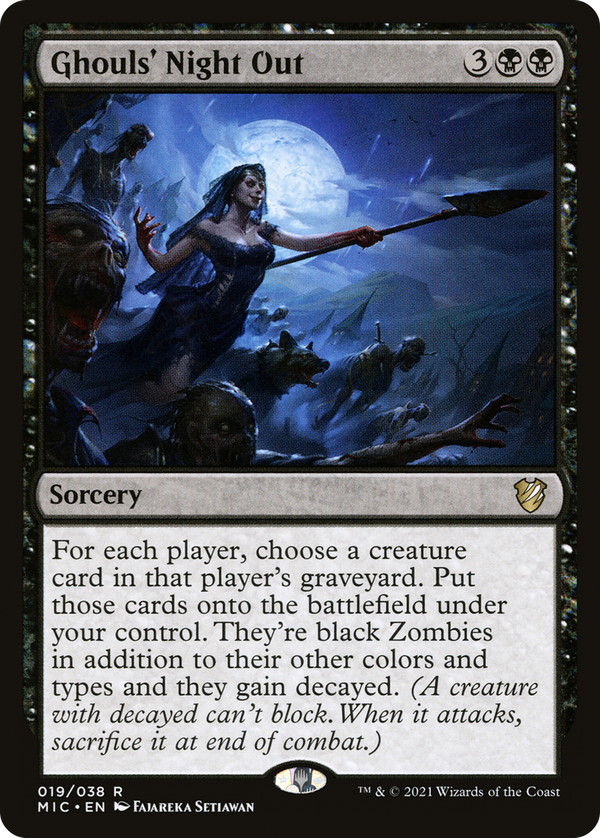
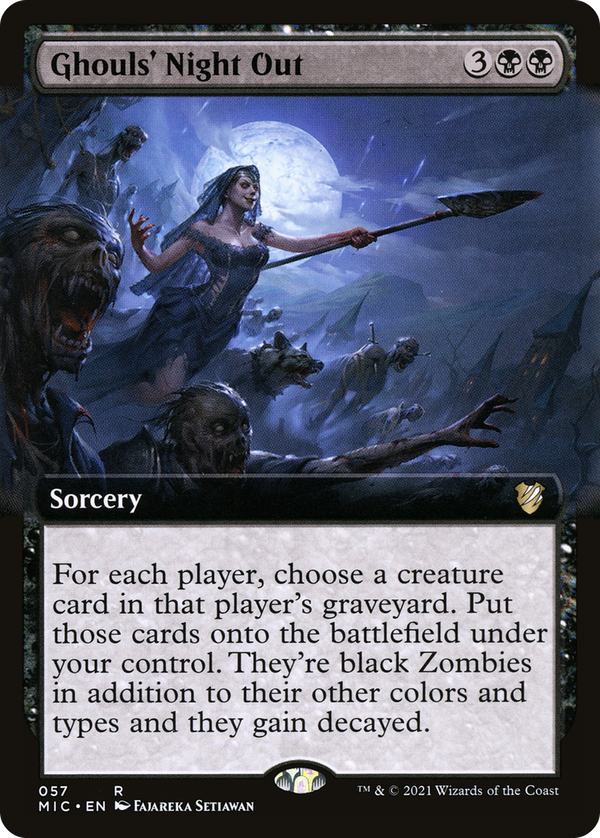
Ghouls' Night Out


The multiplayer table is the entire point here, because the effect scales with the number of players it robs rather than with your own graveyard. Single-target reanimation asks whose creature you want back; this asks around the room, one card from each player, and returns them all at once under your control. What keeps that from being an unconditional army is decayed: the stolen creatures cannot block, and every one that attacks is sacrificed at end of combat. So the payload is temporary by design. You are not stealing bodies to keep, you are borrowing them for a single alpha strike. That reframes the card from a value engine into a tempo swing, and it interacts sharply with the fact that the reanimated creatures are still creatures with their own enters-the-battlefield and dies triggers. A grip of decayed Zombies that will die anyway pairs naturally with sacrifice outlets, aristocrat drains, and reanimation loops that want the bodies to leave the battlefield rather than persist. The design is really two effects stacked: symmetrical graveyard theft that punishes a table full of stocked yards, and a built-in expiration date that turns the fetched creatures into ammunition. Both halves point the same direction, toward a build that wants creatures to enter, swing, and die on the same turn.